Business
Ayushman Bharat 2026: AI to Speed Up Health Insurance Claims, Detect Fraud and Simplify Medical Records
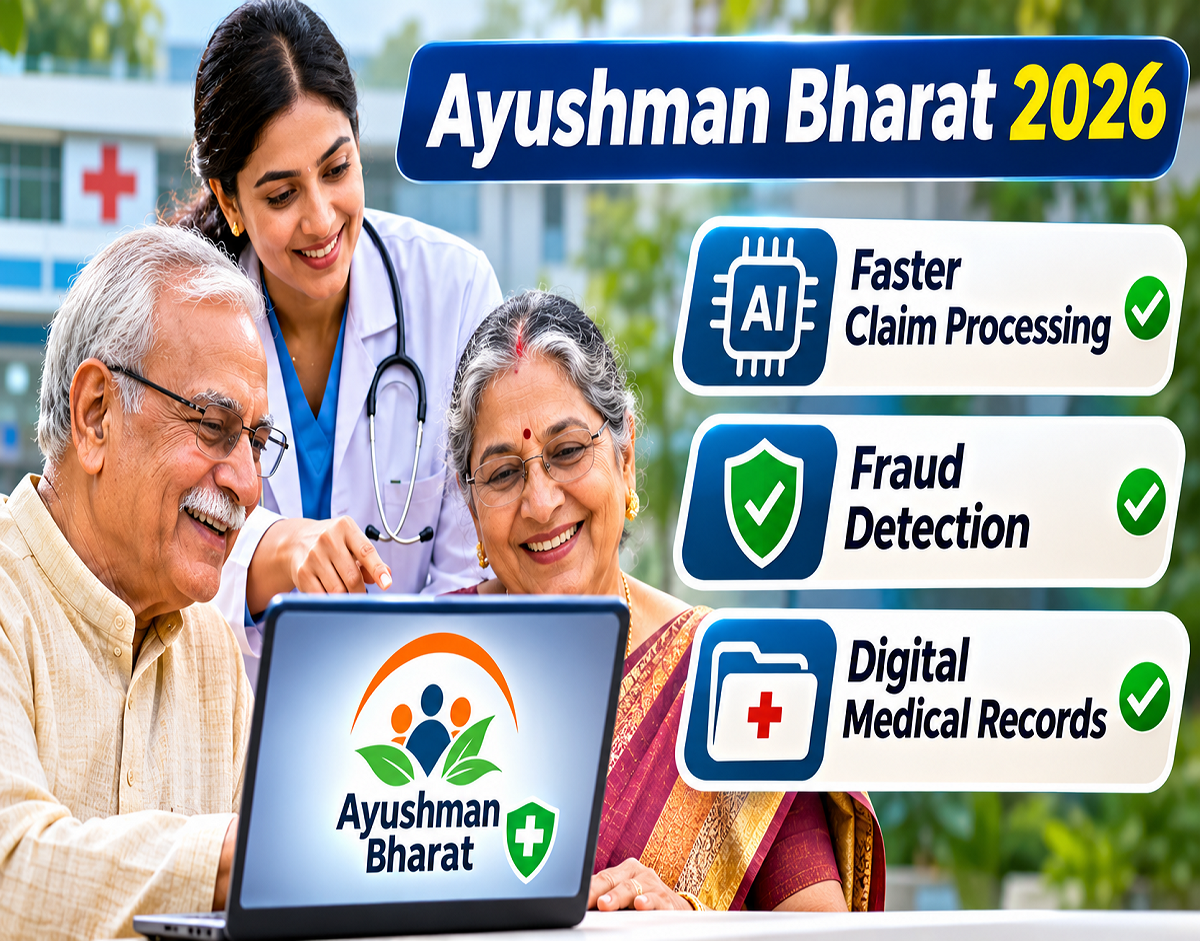
Ayushman Bharat AI Update 2026: The central government is exploring greater use of artificial intelligence (AI) across the Ayushman Bharat healthcare ecosystem to improve insurance claim processing, identify suspicious transactions and simplify digital medical documentation. The proposed changes could strengthen the Ayushman Bharat Pradhan Mantri Jan Arogya Yojana (AB PM-JAY) and Ayushman Bharat Digital Mission (ABDM), making healthcare administration more efficient for hospitals, doctors and eligible beneficiaries.
Ayushman Bharat May See Major Changes Through Artificial Intelligence
India's public healthcare system is gradually adopting advanced digital technologies to improve the delivery of medical services.
The National Health Authority (NHA), which plays a central role in implementing Ayushman Bharat initiatives, is working towards greater integration of artificial intelligence and data analytics into healthcare administration.
According to a Business Today report cited in the November 10 news update, NHA Chief Executive Officer Dr. Sunil Kumar Barnwal highlighted how technology-driven systems could improve healthcare efficiency, strengthen financial oversight and support better patient services.
The proposed transformation is expected to focus on several important areas, including faster insurance claim settlement, automated fraud detection, digital medical records and improved communication between hospitals and insurance-related organisations.
Rather than relying entirely on manual processing, the government wants to use technology to reduce administrative delays and improve the use of public healthcare resources.
However, these developments represent ongoing initiatives and proposed improvements, not confirmation that every AI-based feature is already available at all hospitals.
AI Could Make Ayushman Bharat Insurance Claims Faster
One of the major priorities is improving the processing of health insurance claims submitted under government-supported healthcare programmes.
Hospitals currently need to provide treatment-related information and supporting documents for claim verification and settlement.
Depending on the case, the process can involve administrative checks, document scrutiny and additional verification.
The government is looking to expand automated claim adjudication, a system in which technology evaluates submitted claims against predefined rules and eligibility conditions.
AI-assisted systems could help identify incomplete information, highlight inconsistencies and direct complex cases for further review.
This approach may reduce the time required to process straightforward claims while allowing officials to focus on cases requiring detailed examination.
Faster settlement could also benefit empanelled hospitals by improving the predictability of reimbursements.
For patients, a more efficient claims system could support smoother administration of eligible cashless treatment.
However, actual processing times would depend on implementation, hospital participation and the nature of individual claims.
AI-Based Fraud Detection to Strengthen Healthcare Monitoring
Preventing misuse of public healthcare funds is another important objective.
The National Anti-Fraud Unit (NAFU) plays a role in identifying and monitoring suspicious activity within the Ayushman Bharat system.
AI and data analytics could strengthen this work by examining large volumes of claims and identifying unusual patterns that may require investigation.
For example, automated systems could potentially flag repeated claims, inconsistent treatment records or unusual billing patterns.
Such indicators would not necessarily establish that fraud has occurred. They would help authorised teams identify cases that need further verification.
This distinction is important because automated alerts can sometimes identify legitimate transactions as suspicious.
Human review, clear procedures and appropriate safeguards would therefore remain essential to ensure that genuine patients and healthcare providers are not unfairly affected.
The broader objective is to improve accountability and ensure that government healthcare resources reach eligible beneficiaries.
AI Voice Scribe Could Reduce Doctors' Paperwork
Another development involves using artificial intelligence to assist doctors with medical documentation.
According to the report, NHA recently demonstrated an AI-powered voice scribe capable of converting conversations between doctors and patients into structured medical records.
The technology is designed to recognise spoken information and help prepare clinical notes without requiring doctors to type every detail manually.
Support for multiple Indian languages could make the system particularly useful in a country where patients and healthcare professionals communicate in different regional languages.
For example, during a medical consultation, a doctor may discuss symptoms, medical history and treatment recommendations with a patient.
An AI voice scribe could help prepare a draft record from that conversation.
The doctor would then need to review the information, correct any inaccuracies and approve the final medical documentation.
This human verification step is particularly important because errors in medical records can affect patient care.
Medical Records May Be Linked to ABHA Accounts
The proposed AI documentation system could also support the Ayushman Bharat Digital Mission.
Under ABDM, individuals can create an Ayushman Bharat Health Account (ABHA), which provides a unique 14-digit health identification number.
ABHA is designed to support secure access to and sharing of digital health records across participating healthcare systems, subject to applicable consent and privacy requirements.
Once a doctor verifies an AI-generated medical record, it could potentially be linked to the patient's ABHA account through compatible digital systems.
This could help patients access their health information more conveniently and reduce the need to repeatedly carry paper records.
For example, a patient visiting different participating hospitals may be able to share relevant medical information with authorised healthcare professionals.
However, creating an ABHA account does not automatically mean that every medical record is available digitally.
The availability of records depends on participating healthcare providers, technical integration and applicable consent procedures.
National Health Claims Exchange to Connect Hospitals and Insurers
The government is also working to improve information exchange between hospitals and organisations involved in health insurance claims.
An important component of this effort is the National Health Claims Exchange (NHCX).
The platform is intended to support standardised digital communication among healthcare providers, insurers and other participating organisations.
By connecting hospital information systems with NHCX, the government aims to reduce fragmented processes and improve the exchange of claim-related information.
Potential advantages include more consistent documentation, fewer manual submissions and improved tracking of claims.
For hospitals, this could simplify administrative work associated with insurance processing.
For insurance-related organisations, standardised information could support more efficient verification and settlement.
The success of this initiative will depend on technical compatibility, adoption by participating institutions and effective data protection measures.
What Is the BODH Platform and How Could It Help?
The report also highlights the use of a platform called BODH for evaluating AI models using Indian healthcare data.
Testing AI systems on relevant local datasets is important because healthcare conditions, languages, clinical practices and patient populations can differ across countries.
An AI tool developed using data from another region may not perform equally well in Indian healthcare settings.
Evaluation using appropriate Indian datasets could help identify performance limitations and support improvements before wider deployment.
Such testing is especially important for applications involving medical documentation, claim assessment and fraud monitoring.
AI models must also be assessed for accuracy, reliability, fairness and potential risks before being used in sensitive healthcare workflows.
What Is Ayushman Bharat PM-JAY?
Ayushman Bharat Pradhan Mantri Jan Arogya Yojana is a government-funded health assurance programme designed to provide financial protection against eligible hospitalisation expenses.
Under the scheme, eligible beneficiary families can receive health coverage of up to ₹5 lakh per family per year for specified secondary and tertiary hospitalisation services.
AYUSHMAN BHARAT PM-JAY AT A GLANCE
Annual health cover
₹5 lakh
Coverage basis
Per eligible family
Treatment facility
Cashless hospitalisation
Hospital network
Empanelled hospitals
The programme covers eligible treatment packages at participating public and private hospitals.
The scheme aims to reduce the financial burden of hospitalisation for qualifying beneficiaries.
Eligibility is determined under the applicable PM-JAY rules and relevant government extensions. The scheme also includes provisions for eligible senior citizens aged 70 years and above under the government's expanded coverage arrangements.
Importantly, PM-JAY coverage and ABHA registration serve different purposes. Having an ABHA number alone does not establish eligibility for ₹5 lakh PM-JAY treatment coverage.
How Could These Changes Benefit Patients and Hospitals?
The proposed AI-driven improvements could influence different parts of the healthcare system.
| Area | Potential benefit |
|---|---|
| Insurance claims | Faster verification and processing |
| Fraud monitoring | Better identification of suspicious claim patterns |
| Medical documentation | Reduced administrative workload for doctors |
| ABHA integration | Easier access to compatible digital health records |
| Hospital connectivity | More standardised exchange of claim information |
| AI model evaluation | Improved assessment of healthcare AI systems |
For patients, the potential benefits include smoother hospital administration and improved continuity of medical records.
Doctors may benefit from reduced documentation requirements, allowing more time for clinical responsibilities.
Hospitals could experience improvements in claims administration, while government agencies may gain better tools for monitoring public healthcare spending.
However, the scale of these benefits will depend on successful implementation and appropriate safeguards.
Data Privacy and Patient Consent Will Remain Important
The use of artificial intelligence in healthcare also raises important questions about privacy and information security.
Medical records may contain sensitive personal details, including diagnoses, prescriptions and treatment history.
AI systems handling such information must operate within applicable data protection and healthcare requirements.
Patients should be informed about how their information is collected, processed and shared.
Appropriate consent, secure access controls and human oversight will be particularly important for technologies such as AI voice scribes.
Technology should support medical professionals rather than replace their clinical judgement.
Similarly, automated insurance claim assessment should include mechanisms for reviewing disputed or incorrectly flagged cases.
Will AI Change Ayushman Bharat Benefits or Eligibility?
The reported developments primarily concern healthcare administration, technology integration and digital service delivery.
They do not establish any new change to the existing ₹5 lakh PM-JAY coverage limit or automatically expand eligibility to additional individuals.
Beneficiaries should continue checking their eligibility and treatment entitlements through authorised government channels.
For official information, visit the National Health Authority website or the Ayushman Bharat beneficiary portal.
What Happens Next?
The government is expected to continue developing digital healthcare infrastructure, including automated claims systems, hospital connectivity and AI-assisted documentation.
States have also reportedly been encouraged to strengthen their capabilities in artificial intelligence and data analytics.
However, no single nationwide implementation date for all the proposed AI features has been established in the supplied report.
The rollout of individual services may vary depending on technical readiness, institutional participation and official approvals.
The key takeaway: Ayushman Bharat's next phase of digital development could bring AI-assisted insurance claims, stronger fraud monitoring, multilingual medical documentation and improved hospital data connectivity. These initiatives aim to make healthcare administration more efficient while maintaining the need for medical oversight, patient privacy and reliable verification.
Disclaimer: This article is based on reporting available as of November 10, 2026. The AI-related developments described include proposed, demonstrated and ongoing initiatives. Their availability may differ across hospitals and states. Beneficiaries should consult official National Health Authority communications for confirmed services and eligibility requirements.