
Business
EPFO Alert: When Does Your PF Account Become Inoperative and Stop Earning Interest? Know the Rules
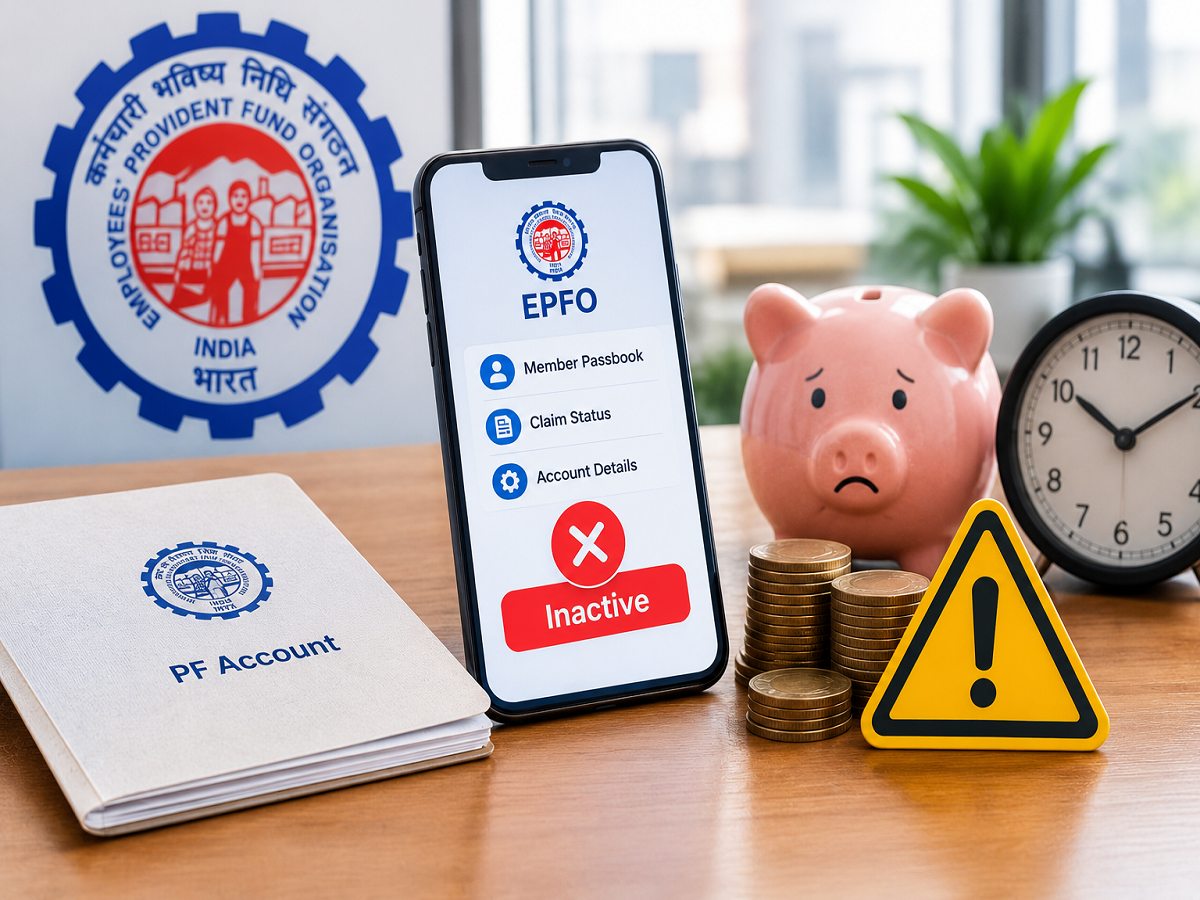
For millions of Employees’ Provident Fund (EPF) members, the PF balance is one of their most important retirement savings. Employees generally focus on monthly contributions and the interest rate, but there is another rule that deserves equal attention: an EPF account can eventually become inoperative, and interest may stop being credited.
EPFO has recently highlighted the rules around inoperative accounts, particularly for employees who retire or leave employment and keep their PF money untouched. Understanding the timeline is important because simply leaving money in an old PF account indefinitely may not always be financially beneficial. (The Economic Times)
Does PF Interest Stop Three Years After Leaving a Job?
This is one of the biggest misconceptions about EPF.
Merely leaving a job and having no contribution for three years does not necessarily mean that interest will automatically stop after 36 months.
The member's age and retirement circumstances are important. EPFO's recent guidance explains different situations depending on when a person retires and when contributions stop. (The Economic Times)
Therefore, employees should not assume that an old PF account automatically loses interest simply because they have not worked for three years.
What Happens If You Retire Before the Age of 55?
Suppose an employee takes early retirement before reaching 55 and no further contribution is made to the EPF account.
According to EPFO's recent explanation, the accumulated EPF balance can continue earning interest up to the age of 58. After reaching 58, the account becomes inoperative and interest stops. (Facebook)
This is an important distinction for people who stop working relatively early.
For example, if someone leaves employment permanently at 52, it would be incorrect to simply assume that interest must stop at 55 because three years have passed. The age-related EPFO rules also need to be considered.
What If You Retire at 55 or Later?
The situation is different for someone who retires at age 55 or later.
EPFO's guidance says the account can continue earning interest for three years from the date of retirement. If the money remains unclaimed beyond the applicable period, the account becomes inoperative and stops earning interest. (LinkedIn)
For example, if an employee retires at 58, the three-year period can take the account up to around age 61.
This is why the commonly repeated statement that "PF interest always stops at age 58" does not accurately describe every situation.
What Does an 'Inoperative EPF Account' Mean?
An inoperative account is essentially an EPF account where the balance remains unclaimed under circumstances specified by the EPF rules.
The important financial consequence is that once the account reaches the stage at which interest is no longer payable, leaving the money untouched means the corpus is no longer growing through regular EPF interest.
Recent government data also shows that this is not a small issue. There were around 21.55 lakh inoperative EPF accounts, according to information reported in August 2026. (The Economic Times)
Separately, government data presented in Parliament showed that ₹9,330.56 crore was lying in inoperative EPF accounts as of March 31, 2026. (The Economic Times)
Changed Jobs? Don't Withdraw PF Without Checking Your Options
Employees who have simply switched jobs should treat their situation differently from retirement.
If you have joined another EPFO-covered organisation, transferring your previous PF balance to the new account linked with your UAN is generally an important option to consider.
EPFO itself advises members who are still working and have a new EPF account to transfer their previous PF balance rather than leaving the old account unattended. (LinkedIn)
This also helps consolidate employment and PF records under the member's UAN.
How Can You Transfer an Old PF Balance?
EPFO provides online services through its Unified Member Portal. Members can access their UAN-linked services and initiate eligible online requests after ensuring that their details are correctly updated. (EPF Member Portal)
Before initiating a transfer or withdrawal, check whether your Aadhaar, PAN where applicable, bank details, mobile number and employment records are correctly linked.
Incorrect personal or employment information can delay processing.
What Should Retired Employees Do?
If you have permanently retired and do not intend to join another EPFO-covered establishment, check how long your PF balance will remain eligible for interest.
The decision to withdraw should also take into account taxation and retirement planning considerations. But allowing an account to reach the stage where it stops earning interest without any financial reason may reduce the growth of your retirement corpus.
EPFO's recent messaging specifically advises eligible retirees to withdraw their funds within the applicable period to avoid losing further interest. (LinkedIn)
EPF and EPS Are Not the Same
Employees should also understand the distinction between EPF and EPS.
EPF is the provident fund corpus where eligible contributions accumulate along with interest. EPS, or Employees' Pension Scheme, operates under separate pension rules.
Under the EPS framework, membership generally continues until the member reaches 58 years of age or pension benefits vest earlier under the applicable provisions. (EPFO)
Therefore, rules concerning PF interest should not automatically be applied to pension benefits.
How to Avoid Problems With an Old PF Account
Members should periodically check their UAN and passbook, keep Aadhaar and bank details updated, and ensure that old Member IDs are correctly linked. If you change jobs, consider transferring the old PF balance to the current account. If you have permanently retired, check the applicable timeline for interest and settlement instead of leaving the corpus unattended indefinitely.
EPFO provides information and member services through its official portal. (EPF India)
The Key Rule Every EPF Member Should Remember
The biggest takeaway is that PF interest does not simply stop because no contribution has been made for three years.
The member's age and retirement date matter. Someone retiring before 55 can generally continue earning interest until 58 under the scenario explained by EPFO, while a person retiring at 55 or later may receive interest for three years from retirement before the account becomes inoperative. (X (formerly Twitter))
Employees who merely change jobs should also avoid confusing an old PF account with permanent retirement. Transferring the accumulated balance to the current EPF account can help keep retirement savings consolidated.
Knowing these rules can prevent a situation where a sizeable PF corpus sits idle without earning further interest simply because the member did not take action at the right time.