Business
Gold Investment: What Could ₹50,000 Invested Today Be Worth by 2036? See 10-Year Return Scenarios
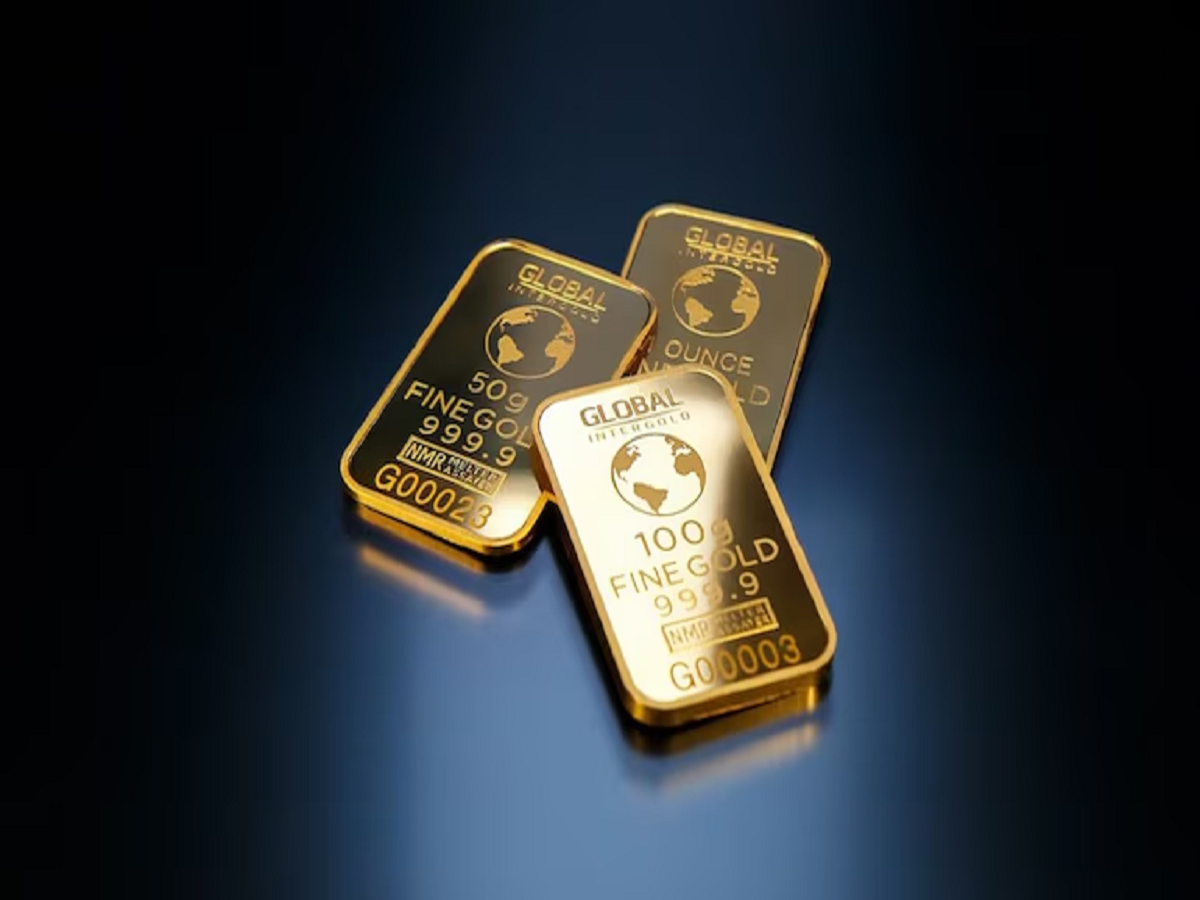
Gold has traditionally occupied a special place in Indian households. It is purchased for weddings and festivals, held as jewellery and also used as a long-term store of wealth. After the sharp rise in gold prices in recent years, however, investors are increasingly asking another question: If ₹50,000 is invested in gold today, how much could it be worth after 10 years?
There is no way to predict the exact gold price in 2036. Past returns do not guarantee future performance, and gold can experience extended periods of both strong gains and weak returns.
Still, different annual return assumptions can help investors understand how a ₹50,000 investment could potentially grow over a decade.
How Has Gold Performed Over the Last 10 Years?
Before looking at 2036, it is useful to understand what happened during the previous decade.
According to the figures used in the source, the average price of 24-carat gold was around ₹28,623 per 10 grams in 2016. By 2026, it had increased to approximately ₹1,53,250 per 10 grams.
That means the price increased about 5.35 times over the 10-year period, translating into an annualised return of approximately 18.6% based on the source's calculation.
Such a strong performance naturally makes long-term investors wonder whether the next decade could produce similar results.
The important point is that there is no guarantee that gold will repeat an 18.6% annual return between 2026 and 2036.
How Much Gold Can ₹50,000 Buy Today?
Using the price of approximately ₹1,53,250 per 10 grams cited in the source, an investment of ₹50,000 would correspond to roughly 3.26 grams of gold before accounting for costs associated with buying physical gold.
If you buy jewellery or physical gold, however, the amount and eventual investment return can be affected by GST, making charges, wastage and the difference between buying and selling prices.
For return calculations, it is therefore easier to treat ₹50,000 simply as an investment amount and examine how it could grow at different assumed annual rates.
What Could ₹50,000 Become by 2036?
Future value can be estimated using compound annual growth.
The calculation is:
Future Value = Investment × (1 + Annual Return)¹⁰
Here are several illustrative scenarios:
| Assumed Annual Return | ₹50,000 Could Become in 10 Years |
|---|---|
| 5.2% | About ₹83,000 |
| 8% | About ₹1.08 lakh |
| 10% | About ₹1.30 lakh |
| 12% | About ₹1.55 lakh |
| 15% | About ₹2.02 lakh |
| 18.6% | About ₹2.76 lakh |
These are mathematical projections rather than guaranteed returns.
Gold prices could rise faster, grow more slowly or even experience prolonged declines during this period.
What Does the World Gold Council's Long-Term Model Suggest?
The source cites the World Gold Council's Gold Long-Term Expected Return (GLTER) model, which estimates an average annual gold return of around 5.2% between 2025 and 2040.
If ₹50,000 grew at exactly 5.2% annually for 10 years, the calculation would be approximately:
₹50,000 × (1.052)¹⁰ = ₹83,000
So, under this hypothetical scenario, the ₹50,000 investment could grow by roughly ₹33,000 over the decade.
Again, the 5.2% figure is a long-term model assumption and should not be interpreted as a fixed annual return.
What If Gold Delivers an 8% Annual Return?
Suppose gold performs better and generates an average annual return of 8%.
At this rate:
₹50,000 × (1.08)¹⁰ ≈ ₹1.08 lakh
Your original ₹50,000 would therefore more than double over the 10-year period.
What If Gold Returns 10% Annually?
At a hypothetical annual return of 10%, ₹50,000 could grow to approximately:
₹50,000 × (1.10)¹⁰ ≈ ₹1.30 lakh
The investment would generate a gain of roughly ₹80,000 before considering taxes, expenses or other transaction costs.
At 12%, ₹50,000 Could Cross ₹1.5 Lakh
If gold delivered a 12% compound annual return for the entire decade, ₹50,000 could grow to approximately:
₹50,000 × (1.12)¹⁰ ≈ ₹1.55 lakh
This demonstrates how even a few percentage points of difference in annual returns can create a substantial difference over a long investment period.
That is the power of compounding.
What If the Previous Decade's 18.6% Return Is Repeated?
This is the most aggressive scenario.
If gold somehow repeated the approximately 18.6% annualised return cited for the previous 10-year period, ₹50,000 could potentially grow to roughly:
₹50,000 × (1.186)¹⁰ ≈ ₹2.76 lakh
That would mean the investment becomes more than five times its original value.
However, investors should be particularly cautious about using this scenario as an expectation.
The previous decade included extraordinary movements in gold prices. Assuming that the same annual growth rate will automatically continue for another 10 years can create unrealistic expectations.
Why Do Gold Prices Rise and Fall?
Gold does not generate a fixed return like a traditional fixed deposit.
Its market price fluctuates continuously and is influenced by several domestic and international factors.
The source highlights four major influences: US Federal Reserve interest-rate decisions, movements in the US dollar, global inflation and geopolitical tensions, and gold purchases by central banks around the world.
When economic or geopolitical uncertainty increases, investors may move money toward gold as a perceived safe-haven asset.
Currency movements can also influence Indian gold prices. Since international gold is generally priced in US dollars, changes in the rupee-dollar exchange rate can affect domestic prices even when the international gold price itself does not move dramatically.
Central-bank buying has also become an important factor influencing global gold demand.
Physical Gold Can Give a Different Return
Investors should also distinguish between the market price of gold and the return actually earned from buying jewellery.
If ₹50,000 is used to purchase physical jewellery, the entire amount does not necessarily represent the underlying value of gold.
The source points to costs including 3% GST, making charges, wastage and the buy-sell price spread.
Suppose you spend ₹50,000 on jewellery. Part of that amount may go toward making charges and taxes rather than the actual gold content.
When you eventually sell the jewellery, you may also not recover the original making charges.
As a result, the investment return can be lower than what a simple comparison of gold prices suggests.
Jewellery and Investment Gold Serve Different Purposes
This distinction is particularly important for Indian buyers.
Jewellery has an emotional, cultural and practical value beyond investment returns. If the purpose is a wedding, festival or personal use, making charges may simply be part of the purchase.
But someone buying gold purely to gain exposure to its price may want to compare different investment routes rather than automatically choosing jewellery.
Gold ETFs and gold mutual funds are among the alternatives available to investors seeking gold exposure without storing physical metal.
The source also mentions digital gold, although investors should separately examine the regulatory framework, costs, custody arrangements and risks associated with any investment product before committing money.
Should You Invest ₹50,000 in Gold Today?
The answer depends on your financial objectives rather than a prediction that gold will reach a particular price by 2036.
Gold can play a diversification role because its performance may differ from assets such as equities and bonds. However, concentrating a large portion of savings in a single asset can also create risk.
An investor should therefore consider the purpose of the investment, time horizon, liquidity requirements, existing portfolio and risk tolerance.
Most importantly, the extraordinary returns seen during one period should not be treated as a promise of future gains.
The Bottom Line
Gold's performance over the previous decade has been impressive. According to the figures cited in the source, 24-carat gold increased from around ₹28,623 per 10 grams in 2016 to approximately ₹1,53,250 in 2026, representing an annualised return of about 18.6%.
But the next 10 years could look very different.
If ₹50,000 compounds at the World Gold Council model's cited 5.2% annual rate, it could become approximately ₹83,000 by 2036. At 10%, it could reach around ₹1.30 lakh, while a 15% return could take it to roughly ₹2.02 lakh.
Repeating the previous decade's 18.6% annualised performance could theoretically push the value to around ₹2.76 lakh, but such an outcome should be viewed as an illustrative high-return scenario—not a forecast.
For investors, therefore, the more useful question may not be "What will ₹50,000 definitely become by 2036?" but rather "How much gold fits appropriately into my overall long-term investment plan?"
Disclaimer: The calculations above are illustrative and based on assumed compound annual returns. Gold prices can rise or fall, and past performance does not guarantee future returns. Taxes, transaction costs and other charges can reduce actual returns. This article is for general information and should not be treated as investment advice.