
Business
EPFO ECR Filing Deadline: Employers Must Deposit July PF Contributions to Avoid Late Payment Charges
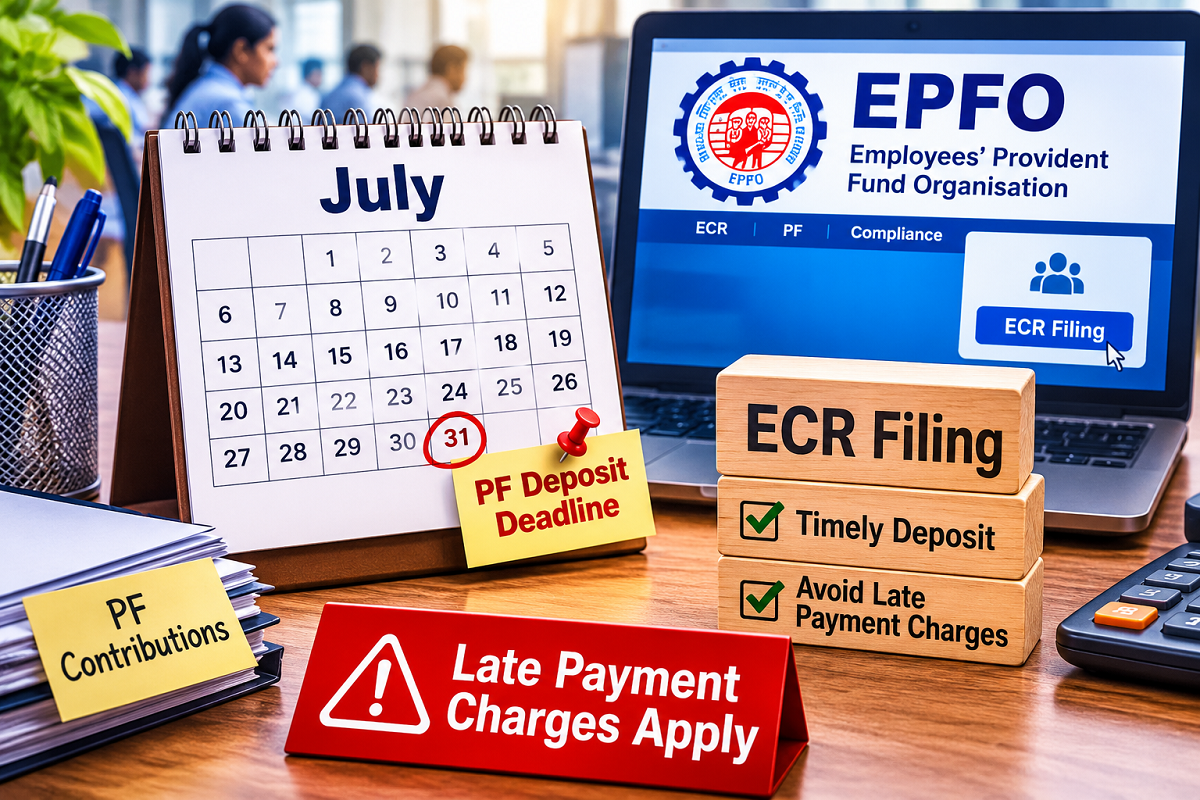
EPFO-covered employers need to pay close attention to the monthly ECR and provident fund contribution deadline. Delays in depositing employees’ PF contributions can lead to interest, damages and compliance-related issues.
Employers registered with the Employees’ Provident Fund Organisation (EPFO) have an important monthly compliance responsibility: filing the Electronic Challan-cum-Return (ECR) and depositing provident fund contributions within the prescribed timeline.
For contributions relating to July 2026, August 15 was the regular due date for completing the process. Employers who have not yet complied should check their filing and payment status immediately, as delays can result in additional financial liabilities and other compliance complications.
The ECR process is important not only for companies but also for employees whose provident fund contributions are deducted from their salaries every month. Timely filing and payment help ensure that the contribution is properly reflected in the employee's PF account.
What Is ECR and Why Does It Matter?
ECR stands for Electronic Challan-cum-Return. It is an electronic return filed by employers covered under EPFO to report employee-wise details of provident fund contributions.
The return contains information relating to employees and the contributions payable for the relevant wage month. Once the required information is submitted, the employer can proceed with the challan and payment process.
For salaried employees, this compliance is particularly important because a portion of their eligible salary is generally contributed toward provident fund, with the employer also making the applicable contribution under EPF rules.
When employers complete the ECR and payment process on time, the contribution can be correctly accounted for in employees' provident fund records.
July 2026 PF Contribution Due Date
The regular deadline for filing the ECR and paying PF contributions for a wage month falls on the 15th of the following month.
Accordingly, the regular due date for contributions relating to July 2026 was August 15, 2026.
Employers should not treat ECR filing and contribution payment as an optional administrative exercise. They are part of statutory EPF compliance for establishments covered under the applicable rules.
Businesses that have missed the deadline should complete the pending process as soon as possible rather than allowing the delay to continue.
What Happens If an Employer Misses the PF Payment Deadline?
Late payment of provident fund dues can have financial consequences for employers.
Depending on the nature and duration of the default, delayed deposits may attract interest and damages under the applicable provisions of the Employees' Provident Funds and Miscellaneous Provisions Act, 1952.
The amount ultimately payable can depend on factors such as the period of delay and the applicable EPFO provisions.
Therefore, employers should verify both ECR submission and payment rather than assuming that completing only one part of the process is sufficient.
Maintaining timely PF compliance can also prevent complications in employee records and reduce the risk of disputes over missing or delayed contributions.
How Employers Can Check Previous ECR Records
Employers who want to verify whether an ECR was filed for a particular month can check their records through EPFO's employer services.
Start by signing in to the EPFO Employer Portal using the authorised username and password.
After logging in, navigate to the payment-related section and look for the ECR/Challan History option. Select the relevant wage month for which the filing needs to be verified.
The portal should display the available details relating to the ECR and challan. Once payment has been successfully completed, the relevant challan receipt can also be downloaded and retained for company records.
This facility can be particularly useful for employers reviewing previous months' statutory compliance or reconciling their payroll and PF payment records.
Employees Can Also Keep an Eye on Their PF Contributions
Although filing ECR and depositing statutory contributions are responsibilities of the employer, employees should periodically check whether their PF contributions are being credited correctly.
EPFO members can review their provident fund passbook to see the contributions recorded against their account. If salary slips show PF deductions but corresponding entries do not appear for an unusually long period, employees may first raise the issue with their employer or payroll department.
Keeping track of PF contributions is important because EPF savings are intended to build a long-term financial corpus and may also be used under eligible withdrawal provisions.
Employers Should Maintain Monthly EPFO Compliance Records
Businesses covered by EPFO should ideally maintain a monthly compliance checklist covering payroll processing, employee contribution details, ECR submission, challan generation and final payment.
Employers should also retain payment receipts and ECR-related records for future verification.
If the July 2026 contribution remains unpaid after the regular August 15 deadline, completing the process promptly can help prevent the delay from becoming longer and potentially increasing the associated liability.
Employees, meanwhile, can periodically monitor their PF passbook and account details to ensure contributions deducted from their salary are properly reflected in their EPFO records.