
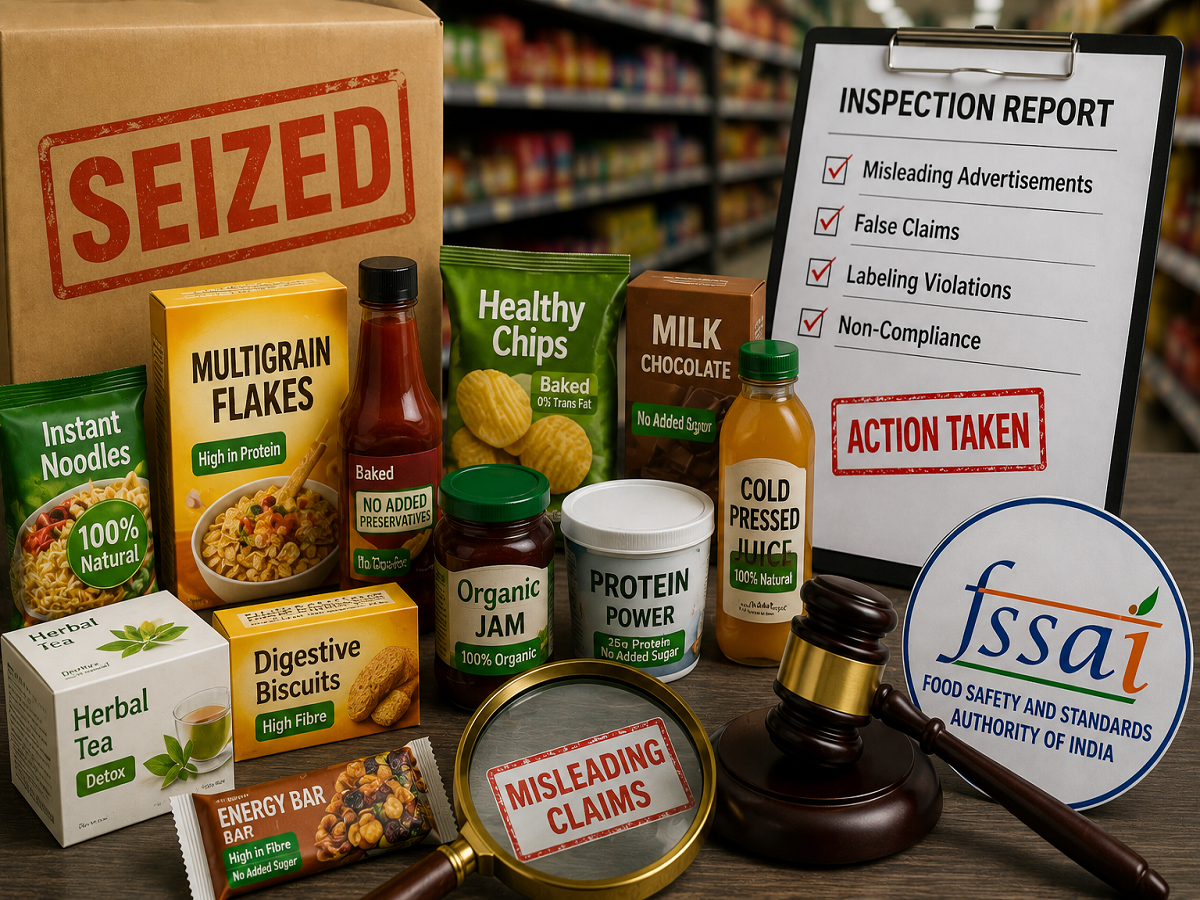
FSSAI Action on Food Brands: India’s food safety regulator has stepped up scrutiny of food and beverage companies, issuing more than 150 notices in recent months over misleading advertisements, false or potentially unsupported claims, and violations of labelling rules. The action covers several well-known companies operating across packaged foods, beverages, energy drinks and other categories.
The Food Safety and Standards Authority of India (FSSAI) has said that its enforcement drive is aimed at ensuring companies follow food safety and advertising regulations and that consumers receive accurate information about the products they buy.
The development is particularly important for consumers because claims printed on packaging or promoted through advertisements can influence buying decisions. FSSAI's latest action indicates that regulators are taking a closer look at how food products are marketed as well as how information is displayed on labels.
Which Major Food Brands Have Received Notices?
According to reports on the regulator's recent action, companies named among those receiving notices include Nestlé India, PepsiCo, Abbott India, Red Bull, Danone India, Monster Energy India, Hell Energy, Mondelez India, Coca-Cola India, Diageo, Pernod Ricard, Ferrero India and Kenvue.
Importantly, receiving a notice does not by itself establish that a company or all of its products have violated food-safety standards. A notice generally gives the concerned entity an opportunity to respond to the regulator's observations.
FSSAI said more than 150 notices were related to issues such as misleading advertising, false claims and non-compliance with labelling requirements.
Why Has FSSAI Taken Action?
Food companies frequently use terms and claims on packaging and in advertising to differentiate their products. However, such representations are expected to comply with applicable food-safety and advertising regulations.
Regulatory scrutiny becomes important when a product's marketing could potentially give consumers an inaccurate impression about its ingredients, nutritional value, health benefits or other characteristics.
The latest enforcement drive is therefore not limited to checking the food inside a packet. How a product is described, labelled and advertised can also come under FSSAI scrutiny.
Recent reports say that some companies have already started taking corrective measures following regulatory notices, including changes to product labels, categorisation or advertising practices.
Food Delivery and Quick-Commerce Platforms Also Under Scanner
FSSAI's action has extended beyond packaged-food manufacturers.
According to reports, the regulator has issued 12 notices involving quick-commerce/e-commerce operations, including those associated with Amazon and Flipkart. FSSAI has also said that the licence of one Amazon warehouse was cancelled.
This shows that food-safety compliance is increasingly being examined across the entire supply chain rather than only at manufacturing facilities.
Online platforms have become an important channel for consumers to buy groceries, beverages, packaged foods and ready-to-eat products. As their role grows, compliance relating to storage, sale and presentation of food products is also receiving greater regulatory attention.
Restaurants and Food-Service Businesses Face Action Too
Restaurants and other food-service establishments have also come under scrutiny.
More than 30 notices have reportedly been issued to establishments associated with brands such as KFC, McDonald's, Pizza Hut, Domino's and Costa Coffee. Reports also say five Domino's licences were suspended.
Separately, hotels and restaurants have faced scrutiny over requirements such as calorie disclosure and menu labelling.
The wider enforcement drive therefore covers several parts of India's food ecosystem—from packaged-food manufacturers and beverage companies to online commerce and food-service operators.
What Should Consumers Check Before Buying Food Products?
Consumers should avoid relying only on attractive marketing claims on the front of a package. The ingredient list, nutrition information, expiry or best-before date, allergen information and other mandatory details can provide a clearer picture of what a product contains.
Claims suggesting specific health or nutritional benefits should also be considered carefully rather than being treated automatically as medical or scientific guarantees.
The latest FSSAI action is also a reminder that a popular brand name does not eliminate the need for consumers to read labels.
FSSAI Tightens Enforcement Across Food Industry
The latest round of notices indicates stronger regulatory attention to the way food and beverage products are marketed and labelled in India. FSSAI has said it has taken action against food business operators for serious violations and has also seized products in some cases.
At the same time, consumers should distinguish between a regulatory notice and a final finding of wrongdoing. The significance of each case will depend on the alleged violation, the company's response and any subsequent action taken by the regulator.
For food companies, the message is clear: advertising claims, packaging and labels need to comply with applicable rules. For consumers, the development underlines the importance of checking product information carefully rather than making purchasing decisions solely on promotional claims.