Business
PM Rahat Yojana 2026: Road Accident Victims Can Get Cashless Treatment, Know Hospital Admission and Claim Process
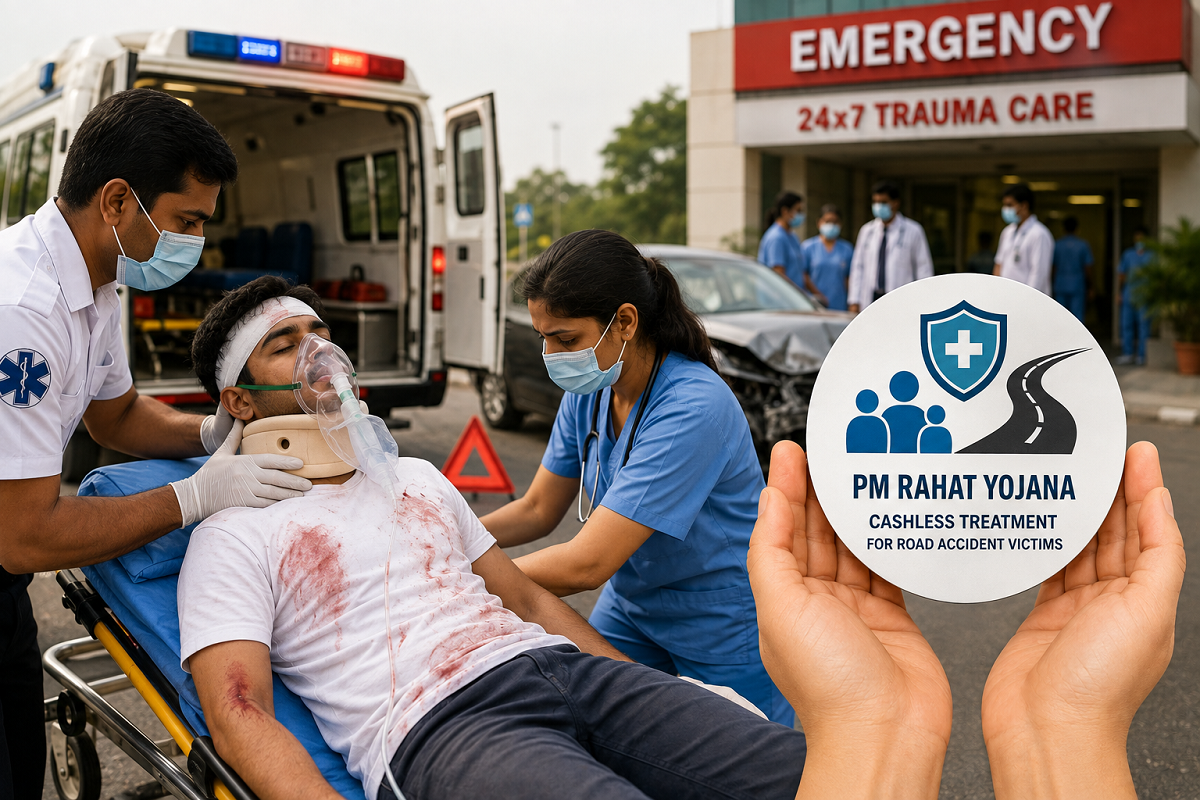
PM Rahat Yojana Application Process 2026: Getting immediate medical attention after a road accident can make a crucial difference, but treatment is sometimes delayed because of concerns over hospital expenses. To address this problem, the government has introduced a cashless treatment framework for eligible road accident victims, allowing them to receive emergency medical care at designated hospitals without having to arrange the covered treatment cost upfront.
The initiative is designed to ensure that financial concerns do not become an obstacle during the critical period immediately after an accident. Here is what road users and their families should know about the treatment limit, hospital admission and claim process.
What Is the Cashless Treatment Scheme for Road Accident Victims?
The scheme provides cashless medical treatment to eligible people injured in motor vehicle accidents. Instead of the patient or family first paying the covered hospital bill and later seeking reimbursement, the approved treatment cost is settled through the scheme's institutional mechanism.
The focus is on getting an accident victim to an appropriate hospital quickly so that emergency treatment can begin without unnecessary financial delays.
How Much Cashless Treatment Is Available?
Under the scheme, an eligible road accident victim can receive cashless treatment of up to ₹1.5 lakh per person per accident.
The treatment benefit is available for a maximum period of seven days from the date of the accident, subject to the applicable conditions and treatment package.
This means the two important limits are:
- Maximum cashless treatment: ₹1,50,000
- Coverage period: Up to seven days from the accident
If the treatment covered under the scheme is completed earlier, the benefit naturally applies only to the eligible treatment actually provided.
Why Is Immediate Treatment So Important?
The period immediately following a serious road accident is extremely important. Severe bleeding, head injuries, internal injuries and trauma may require urgent medical intervention.
The term "golden hour" is commonly used for the critical period immediately after a traumatic injury, when rapid medical attention can significantly affect the outcome.
The cashless treatment initiative therefore aims to reduce delays caused by uncertainty over who will pay the hospital bill.
Who Can Get the Benefit?
The benefit is intended for eligible victims of motor vehicle accidents occurring on roads in India, subject to the conditions laid down under the scheme.
A key feature is that the benefit is linked to the accident and eligible treatment rather than being structured like a conventional health insurance policy purchased by an individual.
However, treatment must follow the prescribed verification and hospital procedures. Families should therefore provide accurate details about the accident and victim whenever requested.
Which Hospitals Can Provide Cashless Treatment?
Cashless treatment is provided through hospitals empanelled under the scheme.
These may include eligible government as well as private hospitals that are part of the designated network.
If an accident occurs, the immediate priority should be to take the injured person to the nearest appropriate medical facility. The hospital and authorities can then determine the applicable procedure for treatment under the cashless scheme.
Not every private hospital should automatically be assumed to be covered, so empanelment is an important factor.
How Does Hospital Admission Work?
The process is designed to minimise paperwork for an injured person during an emergency.
After the victim reaches an eligible hospital, the hospital records the patient's details and information relating to the road accident. The case is then processed through the designated digital system in coordination with the relevant authorities.
Where required, details of the accident are verified before the treatment claim is finally settled.
The idea is that the injured person should not have to complete a lengthy reimbursement application before receiving emergency care.
Do Families Have to Apply Separately for the ₹1.5 Lakh Benefit?
Unlike many reimbursement-based schemes, the cashless road accident treatment mechanism is primarily handled through the hospital and the designated digital platform.
The patient or family may be asked to provide identification details and information about the accident, while the hospital records and processes the treatment case.
This is an important distinction: the ₹1.5 lakh is not a direct cash payment made to the accident victim. It represents the maximum eligible cashless treatment coverage under the scheme.
How Does the Claim Process Work?
Once an eligible patient is admitted, the hospital records the necessary medical and accident-related information on the designated system.
The process may involve verification of the accident by the appropriate authorities. Treatment details, medical records and the eligible amount are then processed according to the scheme's rules.
After approval, the covered treatment amount is settled with the healthcare provider through the prescribed mechanism.
As a result, beneficiaries generally do not have to first pay the entire eligible amount and then wait for reimbursement.
What Information May Be Required?
Although emergency treatment should remain the priority, certain information may be needed for verification and claim processing. Depending on the case, this can include details identifying the patient, information about the accident, hospital records and verification from the relevant authorities.
Families should therefore preserve any documents or information they receive relating to the accident, police reporting and hospital treatment.
However, the absence of paperwork at the accident scene should not become a reason to delay taking a seriously injured person for emergency medical attention.
What Happens If Treatment Costs More Than ₹1.5 Lakh?
The cashless benefit has a prescribed financial ceiling. If eligible treatment expenses exceed ₹1.5 lakh, the amount above the scheme limit would not automatically be covered merely because the initial treatment qualified under this programme.
Other health insurance, government health schemes or personal payment arrangements may therefore become relevant for expenses beyond the applicable cashless-treatment limit.
Similarly, the scheme's seven-day treatment window should not be interpreted as meaning that medical treatment must stop after seven days. It means the specific cashless benefit under this scheme is subject to its prescribed coverage period.
Is ₹1.5 Lakh Paid Directly to the Patient?
No. This is one of the most important points to understand.
The scheme should not be confused with an accident compensation programme that deposits ₹1.5 lakh into the beneficiary's bank account.
The amount represents cashless medical-treatment coverage, subject to eligibility and scheme rules. Payment for approved treatment is processed through the institutional settlement mechanism rather than being handed over as cash to the injured person.
What Should You Do Immediately After a Road Accident?
The first priority should always be the injured person's safety and medical condition. Arrange emergency assistance and take the victim to an appropriate hospital as quickly as possible.
Once the patient is receiving care, family members can ask the hospital whether it is empanelled for the government's cashless road-accident treatment scheme and whether the particular case is being registered under it.
Keep copies or photographs of available accident-related and hospital documents because they may be useful if any verification issue arises later.
Don't Delay Emergency Treatment Over Claim Formalities
A road accident is a medical emergency, and families should not waste critical time trying to understand reimbursement procedures before taking the victim to a hospital.
The cashless framework itself is intended to reduce this burden by allowing eligible cases to be processed through hospitals and government systems.
At the same time, beneficiaries should remember that the ₹1.5 lakh limit does not mean every hospital expense will automatically be approved. Treatment must meet the scheme's eligibility, hospital and verification requirements.
Key Takeaway
The government's cashless treatment scheme for road accident victims is aimed at ensuring quicker access to emergency healthcare without requiring families to immediately arrange the covered hospital expenses.
Eligible accident victims can receive cashless treatment of up to ₹1.5 lakh for a maximum of seven days from the date of the accident, subject to applicable rules. Treatment is provided through designated hospitals, while verification and claim settlement are largely handled between hospitals and the relevant government systems.
Most importantly, the benefit is cashless medical treatment—not a ₹1.5 lakh cash payout to the victim.
Disclaimer: This article is intended for general information only. Eligibility, empanelled hospitals, treatment packages, verification procedures and financial limits are governed by the applicable government rules. In a road accident, obtaining immediate medical assistance should always be the first priority.