
Business
Selling Wedding Jewellery? The Gift May Be Tax-Free, but Your Profit May Not Be—Know the Income Tax Rules
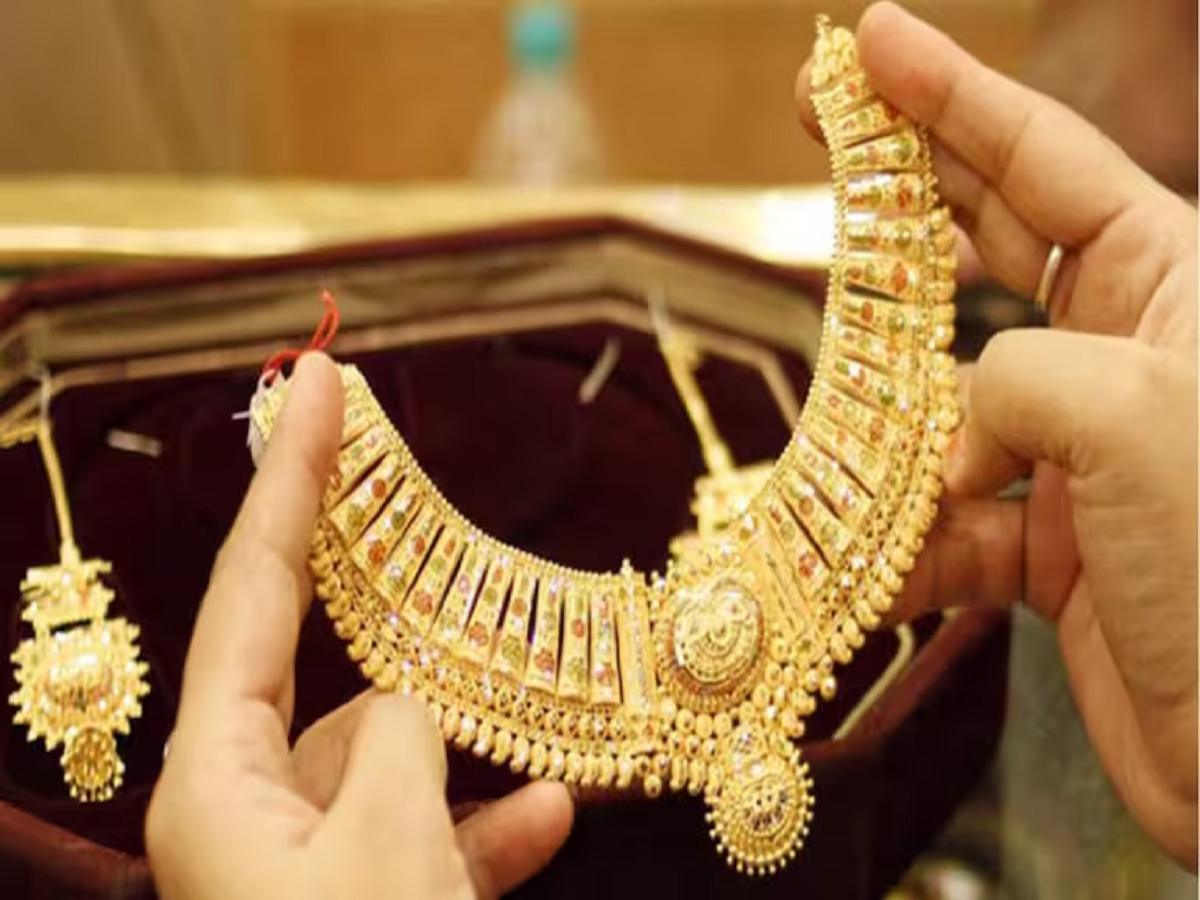
Gold and silver jewellery received during a wedding often carries considerable emotional value, but it can also become an important financial asset. Families may preserve such jewellery for decades, while some people eventually decide to sell it to meet a major expense or take advantage of higher precious-metal prices.
This raises an important tax question: If jewellery received as a wedding gift was tax-free, does that mean the money received when it is sold is also completely tax-free?
The answer is no.
According to the tax rules explained in the source article, receiving jewellery as a gift on the occasion of marriage and subsequently selling that jewellery are treated as two separate events for income-tax purposes.
The gift itself can qualify for tax exemption. However, if the jewellery is later sold for a profit, capital gains taxation can apply.
Importantly, tax is generally calculated on the applicable gain rather than automatically on the entire sale proceeds.
Here's how the calculation works.
Jewellery Received on Marriage Can Be Tax-Free
Indian income-tax rules provide a specific exemption for gifts received by an individual on the occasion of their marriage.
According to the source article, this exemption can cover different forms of gifts, including jewellery, cash and other property received on the occasion of marriage.
The value of the wedding gift does not by itself make it taxable in the hands of the recipient under the rule described in the source.
This distinction is important because the general taxation of gifts can work differently in other circumstances.
However, the tax exemption available when the jewellery is received does not permanently make the asset exempt from all future taxation.
The situation changes if the jewellery is eventually sold.
Selling Gifted Jewellery Can Trigger Capital Gains Tax
Suppose a person receives gold jewellery from a parent during marriage and keeps it for several years.
There may be no tax liability merely because the jewellery was received as a wedding gift, subject to the applicable conditions.
Now suppose the same jewellery is later sold.
At this point, the transaction can result in a capital gain.
The crucial point is that the entire amount received from selling the jewellery is not necessarily treated as taxable profit.
Instead, the tax calculation considers the relevant cost of acquisition and the amount received on sale.
Broadly, the taxable gain is determined by comparing the applicable cost of the asset with the sale consideration, subject to the relevant tax rules.
Example: Selling Jewellery for ₹8 Lakh Does Not Automatically Mean ₹8 Lakh Is Taxable
Consider a simplified example.
Assume jewellery received as a wedding gift is eventually sold for ₹8 lakh.
It would be incorrect to automatically assume that ₹8 lakh becomes taxable income merely because that amount was received from the buyer.
The original cost of acquiring the jewellery has to be considered for calculating the capital gain.
If the applicable acquisition cost were ₹3 lakh, for example, the basic difference between the sale value and that cost would be ₹5 lakh before considering any other adjustments permitted or required under tax rules.
The important takeaway is that receiving sale proceeds and earning taxable capital gains are not the same thing.
How Is the Purchase Cost Calculated for Gifted Jewellery?
This is where taxation of gifted jewellery becomes particularly important.
You did not purchase the jewellery yourself, so what should be considered its purchase price?
According to the rule described in the source article, the cost paid by the previous owner—the person from whom you received the jewellery—is relevant for determining your cost of acquisition.
For example, suppose your father purchased jewellery and subsequently gave it to you on your marriage.
You did not pay anything to acquire it.
However, that does not mean its cost becomes zero for capital-gains calculation.
The amount originally paid by the previous owner is considered while determining the applicable acquisition cost under the rule explained in the source.
This makes preserving old purchase records particularly useful.
Holding Period of the Previous Owner Can Also Matter
The tax treatment can also depend on how long the jewellery was held.
For gifted assets, the source article explains that the holding period does not necessarily begin only on the day you received the jewellery.
The period during which the previous owner held the asset is also considered.
Suppose your parent bought jewellery several years before your marriage, later gifted it to you and you subsequently sold it.
For determining whether the resulting gain falls into the short-term or long-term category, the relevant holding period includes the period for which the previous owner held the jewellery, according to the source.
This can significantly affect the applicable tax treatment.
When Does Short-Term Capital Gains Tax Apply?
According to the tax treatment outlined in the supplied article, a holding period of 24 months is important for determining the nature of the capital gain on jewellery.
If the combined holding period—from the date the previous owner acquired the jewellery until the date you sell it—is 24 months or less, the resulting profit is treated as a short-term capital gain under the rule described in the source.
The short-term gain is then added to the taxpayer's regular income.
Tax is consequently determined according to the applicable income-tax slab rate.
This means two people earning exactly the same profit from selling similar jewellery could potentially face different tax liabilities depending on their overall taxable income.
When Is the Profit Treated as Long-Term Capital Gain?
If the combined holding period exceeds 24 months, the gain is treated as a long-term capital gain, according to the source article.
The article states that the applicable long-term capital gains tax rate in this situation is 12.5% on the relevant gain.
Therefore, establishing the date on which the jewellery was originally acquired can be important.
For inherited or gifted family jewellery, this can sometimes be difficult because the asset may have remained within the family for many years.
Keeping documents that can establish acquisition details may therefore simplify tax calculations when the jewellery is eventually sold.
What If the Jewellery Was Purchased Before April 1, 2001?
Special consideration applies to very old jewellery.
Many Indian families possess gold ornaments that were bought decades ago and later transferred between generations.
In such situations, locating the original purchase invoice may be difficult or even impossible.
According to the source article, where the jewellery was acquired before April 1, 2001, the taxpayer has the option to consider its fair market value as of April 1, 2001 as the cost of acquisition for the purpose described.
This provision can be particularly relevant for ancestral or very old family jewellery.
You May Need a Registered Valuer for Old Jewellery
If you intend to use the fair market value as of April 1, 2001, simply estimating the value yourself may not be sufficient.
The source article recommends obtaining an official valuation certificate from a registered valuer to establish the jewellery's fair market value on the relevant date.
Such documentation can become important if the tax calculation is later questioned or requires supporting evidence.
For old jewellery, therefore, it may be useful to arrange the valuation and documentation before or around the time of sale rather than attempting to reconstruct everything much later.
Keep Purchase Bills and Gift Records Wherever Possible
Documentation can make a significant difference when dealing with gifted jewellery.
If available, preserve records such as the original purchase invoice, documents indicating who purchased the jewellery, relevant valuation reports and evidence supporting how and when the asset came into your possession.
Wedding photographs, gift records or other supporting documentation may also be useful depending on the circumstances, although the appropriate evidence can vary.
For jewellery purchased many years ago, the original invoice may no longer exist. In such cases, professional advice may be needed to determine what alternative documentation can support the applicable cost and holding period.
Wedding Gift Exemption and Capital Gains Are Two Different Rules
The most important point is to separate two events.
Event one: Receiving jewellery at your wedding.
The gift may qualify for the marriage-related tax exemption under the applicable income-tax provisions.
Event two: Selling that jewellery later.
A sale is a separate transaction. If the sale generates a taxable capital gain, tax can become payable even though the jewellery was originally received without a tax liability.
This is where many taxpayers can become confused.
A tax exemption at the time of receiving an asset does not necessarily mean all future income or gains arising from that asset will also remain exempt.
Don't Calculate Tax on the Entire Sale Amount
Another common misunderstanding is that selling jewellery worth ₹10 lakh automatically creates ₹10 lakh of taxable income.
That is not how the capital-gains concept described in the source works.
The relevant gain has to be calculated after considering the applicable acquisition cost and other rules.
Similarly, simply receiving ₹10 lakh from a jewellery sale does not tell you what the final tax liability will be.
The original acquisition date, purchase cost, previous owner's holding period and whether special rules for older assets apply can all affect the calculation.
Check the Tax Position Before Selling High-Value Jewellery
Anyone planning to sell valuable wedding jewellery should ideally examine the tax implications before completing the transaction.
Start by determining who originally purchased the jewellery and when it was bought.
Then identify the original purchase cost if records are available.
If the jewellery is very old, check whether the April 1, 2001 fair-market-value provision described above could apply and whether a registered valuation is required.
Finally, determine the applicable holding period and whether the resulting gain would fall into the short-term or long-term category under the prevailing rules.
For high-value transactions, consulting a chartered accountant or qualified tax professional can help ensure the gain is calculated and reported correctly.
The Bottom Line
Jewellery received on the occasion of marriage can enjoy favourable tax treatment when it is received, but that exemption should not be confused with the taxation of a later sale.
If the jewellery is sold for more than its applicable acquisition cost, the resulting profit can create a capital-gains tax liability.
The holding period is also important. Under the rules described in the source article, a combined holding period of up to 24 months can result in short-term capital-gains treatment, while a period exceeding 24 months can lead to long-term capital-gains treatment.
For old family jewellery, the acquisition history becomes particularly important because the previous owner's cost and holding period may be relevant. Jewellery acquired before April 1, 2001 can also involve special valuation considerations.
So, before turning wedding gold into cash, gather the available purchase and ownership records and understand the tax calculation. The jewellery may have been tax-free when it arrived as a wedding gift, but any profit earned when it leaves your hands through a sale can be a different tax story.
Disclaimer: This article is intended only for general information and should not be considered personalised tax or financial advice. Tax provisions, rates and interpretations may change and can vary according to individual circumstances. Consult a qualified tax professional and verify the latest income-tax rules before selling high-value jewellery or filing the resulting capital gains.