
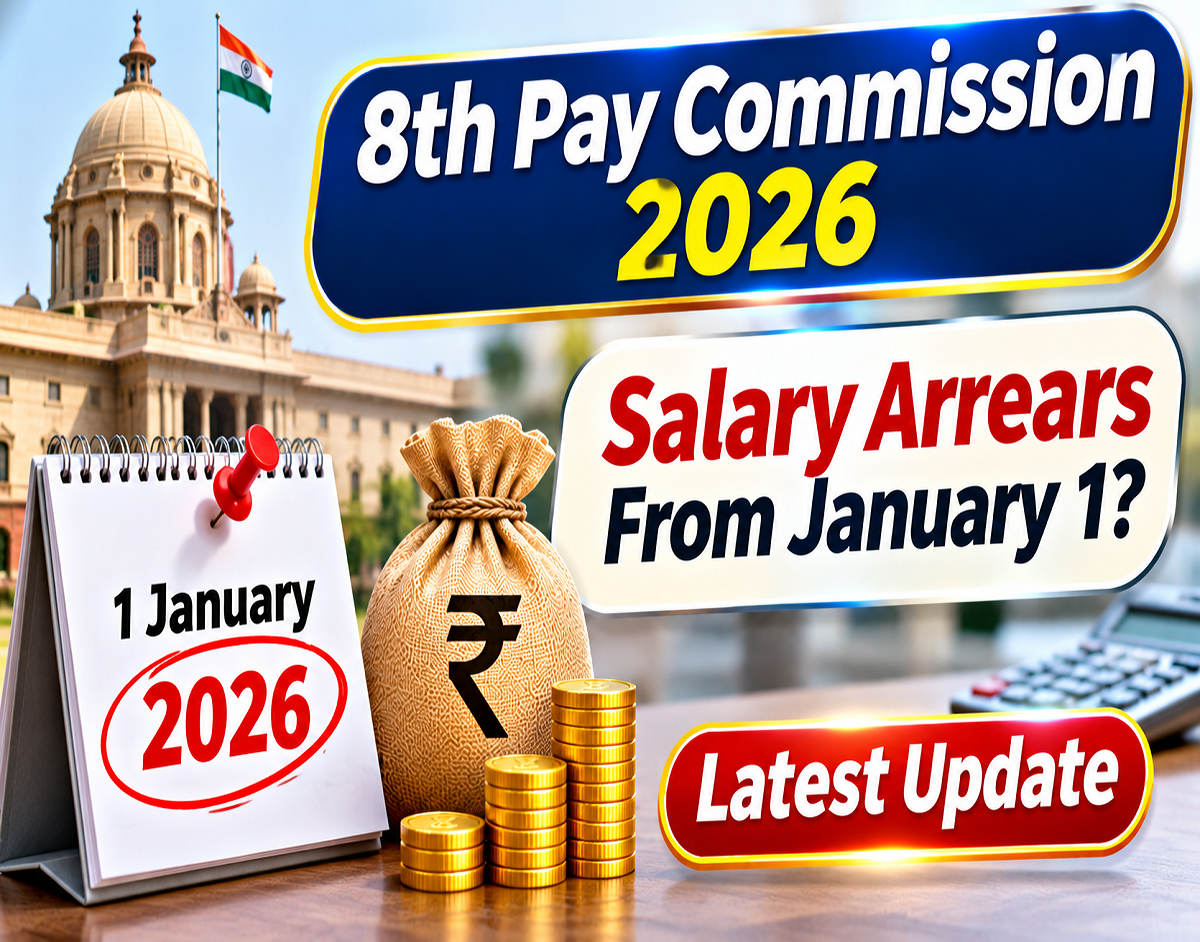
8th Pay Commission Latest Update 2026: Central government employees and pensioners are awaiting the recommendations of the 8th Central Pay Commission, particularly regarding salary increases, pension revisions and possible arrears from January 1, 2026.
The commission was formally constituted on November 3, 2025, and given 18 months to submit its recommendations. Based on this timeline, its report is expected by May 3, 2027, unless the schedule is revised.
However, the submission of the report will not automatically result in higher salaries. The Central Government must first examine and approve the recommendations before implementing revised pay scales and pension benefits.
When Will the 8th Pay Commission Submit Its Report?
The Central Government approved the commission's Terms of Reference on October 28, 2025, followed by its formal constitution on November 3, 2025.
The commission has been given 18 months to review the existing salary structure, allowances, pensions and other relevant benefits.
Accordingly, May 3, 2027, is the calculated deadline for submitting its report.
The commission may submit its recommendations earlier, but the actual implementation schedule will depend on subsequent government decisions.
Will Central Government Employees Get Arrears From January 1, 2026?
January 1, 2026, is being discussed as a possible effective date for the revised pay structure because the recommendations of the 7th Pay Commission took effect from January 1, 2016.
The government has also indicated that the 8th Pay Commission's recommendations would normally be expected to take effect from January 1, 2026.
However, the final effective date and arrears arrangements have not yet been officially confirmed.
If the government approves revised salaries with retrospective effect from January 1, 2026, employees could become eligible for arrears covering the difference between their existing and revised pay.
The amount would depend on the approved pay structure, applicable allowances and the period covered.
Therefore, claims circulating online about guaranteed arrears or fixed payment dates should be treated cautiously.
Will Salaries Increase in 2027?
The commission is expected to submit its recommendations in 2027, but this does not guarantee that revised salaries will be paid during the same year.
After receiving the report, the government must decide which recommendations to accept and issue the necessary implementation orders.
Consequently, the report submission date, effective date and actual payment date may be different.
Employees should wait for official notifications before assuming that higher salaries will be credited in a particular month.
How Much Could Basic Salary Increase?
The fitment factor will be an important consideration in determining revised basic salaries.
It is a multiplier used to calculate a new basic pay amount from the existing salary.
However, no final fitment factor for the 8th Pay Commission has been approved.
For illustration, consider an employee with an existing basic salary of ₹18,000.
| Illustrative Fitment Factor | Calculated Basic Salary |
|---|---|
| 1.80 | ₹32,400 |
| 2.00 | ₹36,000 |
| 2.28 | ₹41,040 |
| 2.57 | ₹46,260 |
| 2.86 | ₹51,480 |
These figures are mathematical examples, not official salary projections.
The actual revised pay will depend on the approved recommendations, pay matrix and applicable government rules.
What About Pensioners and Allowances?
The commission's review extends beyond basic salaries and includes relevant allowances, pensions and other service-related benefits.
Central government pensioners are also awaiting clarity on possible pension revisions.
However, the extent of any pension increase, revised allowance structure and implementation date will become clear only after the government announces its decisions.
Demands submitted by employee organisations should not be confused with approved recommendations.
8th Pay Commission: Important Dates
| Date | Development |
|---|---|
| October 28, 2025 | Terms of Reference approved |
| November 3, 2025 | Commission formally constituted |
| January 1, 2026 | Expected effective date under the usual ten-year cycle; final decision pending |
| November 3, 2026 | One year since constitution |
| May 3, 2027 | Calculated deadline for submitting recommendations |
| After report submission | Government review and implementation decisions |
What Should Employees Watch for Next?
Three official developments will determine the financial impact of the 8th Pay Commission.
First, the commission must submit its recommendations, including proposals concerning pay revision and pensions.
Second, the government must decide which recommendations to approve and announce the final fitment factor and revised pay structure.
Third, the implementation orders must clarify the effective date and whether arrears will be payable.
Until these decisions are announced, specific salary increases and arrears amounts remain speculative.
Final Update
The 8th Central Pay Commission has until May 3, 2027, under its 18-month reporting timeline to submit its recommendations.
January 1, 2026, remains an expected reference date for implementation, but the government has not confirmed the final effective date or arrears payment arrangements.
Employees may receive arrears from January 1, 2026, only if the government approves retrospective implementation and provides for the relevant payments.
Similarly, revised salaries and pensions will be implemented only after the necessary government approvals and orders.
Official Reference: Government of India, Ministry of Finance — 8th Central Pay Commission constitution and Terms of Reference.
Disclaimer: Fitment factors and salary calculations shown above are illustrative. Final pay, pension, effective dates and arrears will depend on official government decisions.