
Business
Cooperative Bank AePS Services 2026: Withdraw Cash, Check Balance and Access Banking Services From Home
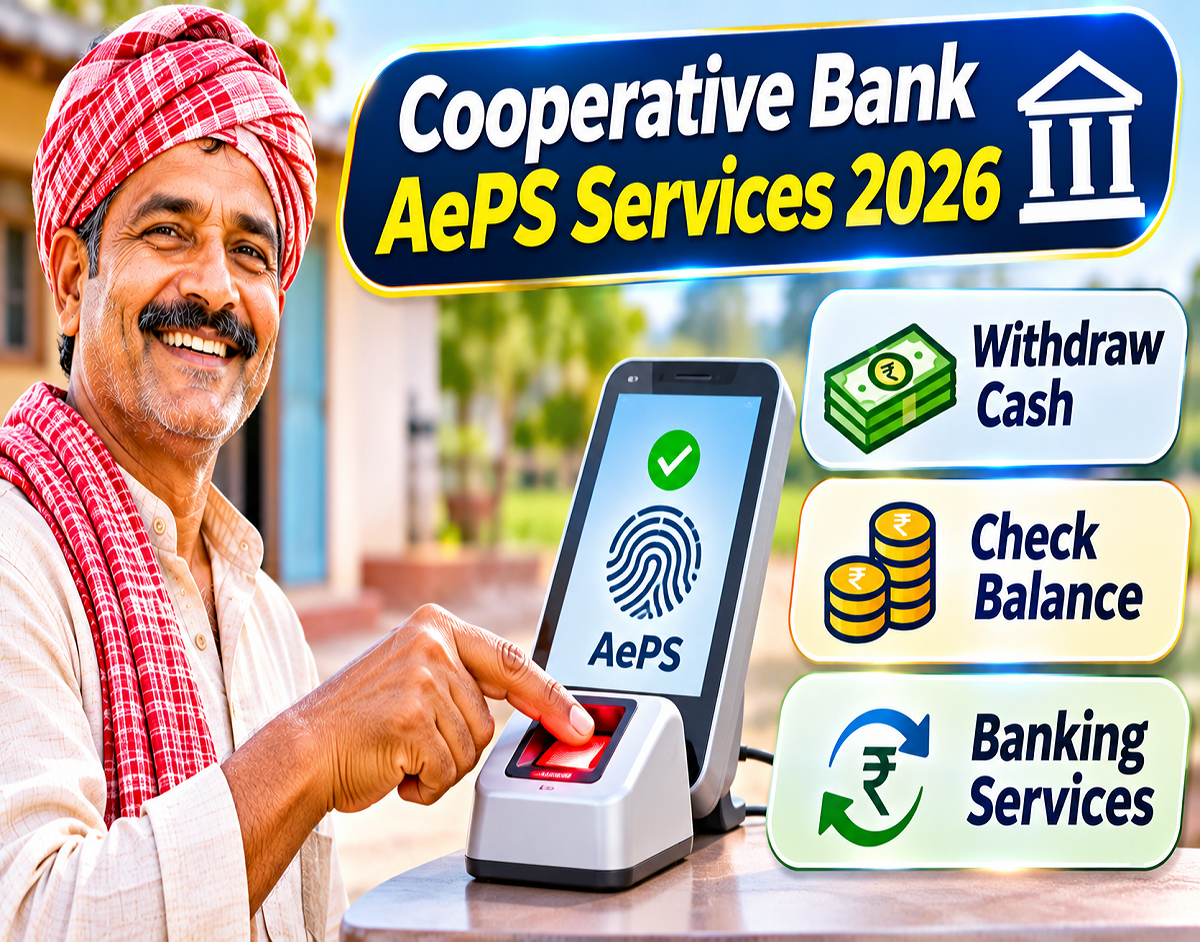
Cooperative Bank AePS Services 2026: Customers of cooperative banks may find it easier to access essential banking services without repeatedly visiting their nearest branch. The Aadhaar Enabled Payment System (AePS) offers a digital banking solution that allows eligible customers to perform certain financial transactions using Aadhaar-based authentication through authorised banking agents and micro-ATMs.
The facility can be particularly useful for senior citizens, rural residents, farmers and individuals living in areas where bank branches are located far from their homes.
According to a report published on November 11, 2026, cooperative banks can use AePS integration to expand their banking services and provide customers with more convenient access to financial transactions.
Through authorised agents, eligible customers may be able to withdraw cash, check account balances and access other supported services from nearby locations or, where available, at their doorstep.
However, the availability of these services depends on whether the cooperative bank supports AePS and whether authorised banking agents operate in the customer's area.
What Is the Aadhaar Enabled Payment System (AePS)?
The Aadhaar Enabled Payment System, commonly known as AePS, is a bank-led payment service developed within India's digital payments ecosystem.
It enables eligible bank customers to perform specified financial transactions using Aadhaar-based authentication at authorised service points.
The system is operated through the National Payments Corporation of India (NPCI) framework.
Instead of using a conventional ATM card for supported transactions, customers can authenticate themselves through their Aadhaar credentials and an approved biometric authentication process.
AePS services are generally delivered through authorised banking correspondents or agents equipped with compatible micro-ATM devices.
The facility is designed to make basic banking services more accessible, particularly in areas with limited banking infrastructure.
Cooperative Bank AePS 2026: Key Features
| Feature | Details |
|---|---|
| Service name | Aadhaar Enabled Payment System |
| Short name | AePS |
| Banking network | NPCI-operated payment framework |
| Eligible users | Customers of participating banks |
| Authentication | Aadhaar-based biometric authentication |
| Service channel | Authorised banking agents and micro-ATMs |
| Cash withdrawal | Available where supported |
| Balance enquiry | Available through participating institutions |
| Mini-statement | Subject to bank and service availability |
| Doorstep banking | Available where authorised agents provide the service |
| Main requirement | Aadhaar-enabled bank account and participating bank |
The exact range of services may differ depending on the bank, transaction type and service provider.
How Does AePS Work?
AePS allows eligible customers to access banking services through an authorised banking agent.
The process generally involves the following steps:
Step 1: Visit an authorised banking correspondent or arrange a doorstep visit if the bank offers this facility.
Step 2: Inform the agent which banking service you want to use, such as cash withdrawal or balance enquiry.
Step 3: Provide the required Aadhaar-related information and identify your bank.
Step 4: Complete the prescribed biometric authentication process using the approved device.
Step 5: The transaction request is processed through the participating banking network.
Step 6: Once the transaction is successful, obtain the transaction confirmation or receipt.
Customers should verify the transaction amount and account details before completing authentication.
They should also retain the transaction reference number in case a complaint or dispute arises.
Which Banking Services Are Available Through AePS?
AePS supports several basic banking functions, depending on the participating bank and service arrangement.
1. Cash Withdrawal
Eligible customers can withdraw money from their bank accounts through authorised AePS agents.
This facility may reduce the need to travel to an ATM or bank branch.
However, withdrawal limits, available cash and applicable charges can vary according to the bank's policies and the service provider.
2. Balance Enquiry
Customers can check their available bank balance using Aadhaar-based authentication.
This may be useful for individuals who do not regularly use mobile banking applications or internet banking.
3. Mini-Statement
Where supported, customers may obtain information about recent transactions.
This can help them review account activity without visiting a branch.
4. Other Supported Transactions
The AePS framework also supports additional transaction categories, subject to participating institutions and applicable rules.
Customers should confirm the exact services available through their cooperative bank before visiting an agent.
Can Cooperative Bank Customers Receive Banking Services at Home?
AePS can support doorstep banking when authorised banking correspondents provide home-visit services.
For example, an elderly customer who finds it difficult to travel to a bank branch may be able to request assistance from an authorised agent operating in the locality.
The agent can use a compatible micro-ATM device to process supported transactions after completing the required authentication.
However, AePS integration does not automatically mean that every cooperative bank customer is entitled to free doorstep banking.
Doorstep availability depends on the bank's service arrangements, agent network, location and applicable charges.
Customers should contact their bank to confirm whether home visits are available.
Why Is AePS Useful for Rural Customers?
Many rural households depend on cooperative banks for agricultural financing, savings and other financial services.
However, visiting a bank branch can sometimes involve considerable travel time and transportation expenses.
AePS can help address this challenge by extending selected banking facilities through authorised service points.
For farmers and agricultural workers, nearby banking access may make it easier to withdraw money or check account balances.
Senior citizens and people with mobility difficulties may also benefit when authorised doorstep services are available.
The system can support financial inclusion by providing alternatives to conventional branch-based banking.
What Are the Benefits for Cooperative Banks?
AePS integration may help cooperative banks improve service delivery and expand access to customers.
Some potential benefits include:
- Wider banking access: Customers can use supported services through authorised agents.
- Reduced branch visits: Routine transactions may be completed outside the bank branch.
- Digital payment integration: Participating banks can connect with the broader AePS ecosystem.
- Improved rural outreach: Banks can serve customers in locations with limited branch infrastructure.
- Convenient customer services: Eligible users may access basic banking facilities closer to home.
The supplied report also mentions an affordable licensing arrangement and a complimentary three-month access period.
However, these appear to relate to a particular service-provider offering rather than a universally applicable NPCI or government benefit.
Cooperative banks should verify such commercial terms directly with the relevant authorised provider.
What Are the Requirements for Using AePS?
Customers generally need an Aadhaar number linked or appropriately mapped to an eligible bank account.
The bank must also participate in the relevant AePS network.
Successful authentication is required for transactions that depend on biometric verification.
If the account is not properly enabled or the bank does not support the requested service, the transaction may fail.
Customers should contact their cooperative bank to confirm account eligibility and service availability.
How Can Cooperative Banks Start Offering AePS Services?
Cooperative banks interested in offering AePS services must follow the applicable technical, operational and regulatory requirements.
The implementation process may involve working with an authorised technology partner or service provider.
Banks may need to evaluate transaction processing arrangements, network connectivity, security standards, settlement procedures and customer grievance mechanisms.
Before selecting a provider, institutions should carefully review licensing costs, transaction charges, service-level commitments and compliance responsibilities.
Any promotional access period or discounted pricing should be confirmed in the provider's official agreement.
Important Safety Tips for AePS Users
Although AePS offers convenient access to banking services, customers should take precautions to protect their accounts.
Use authorised agents only: Complete transactions through verified banking correspondents or service points.
Check transaction details: Confirm the withdrawal amount before providing biometric authentication.
Collect a receipt: Keep the transaction confirmation or reference number for future use.
Monitor account activity: Review bank SMS alerts, statements or other available transaction records.
Protect Aadhaar information: Avoid unnecessarily sharing Aadhaar numbers or identity documents with unknown individuals.
Understand biometric locking: UIDAI provides biometric locking facilities that can help prevent unauthorised biometric authentication. Customers should understand how to unlock their biometrics when they need to complete a legitimate transaction.
If an unauthorised withdrawal occurs, customers should immediately contact their bank and report the incident through the appropriate complaint channels.
Is AePS Available at Every Cooperative Bank?
Not necessarily.
AePS availability depends on the cooperative bank's participation, technical integration and service arrangements.
Some cooperative banks may already provide Aadhaar-based banking services, while others may be evaluating or implementing the necessary infrastructure.
Therefore, customers should not assume that every cooperative bank branch or account automatically supports AePS transactions.
The safest approach is to contact the bank directly and confirm whether the facility is operational.
Where Can Customers Get Official Information?
Customers and cooperative banks can obtain further information from the relevant official organisations.
National Payments Corporation of India (NPCI): https://www.npci.org.in/
Unique Identification Authority of India (UIDAI): https://uidai.gov.in/
Customers can also contact their cooperative bank's official customer service department for details about AePS availability, transaction limits and service charges.
Final Update
The Aadhaar Enabled Payment System offers an additional way for cooperative banks to provide essential banking services outside traditional branches.
Through authorised banking agents and micro-ATMs, eligible customers may be able to withdraw cash, check balances and access other supported banking facilities using Aadhaar-based authentication.
The service can be especially useful for rural residents, senior citizens and people who face difficulties travelling to bank branches.
However, the availability of doorstep services, supported transactions and applicable charges depends on each participating bank's arrangements.
Cooperative bank customers should confirm AePS availability with their bank and use only authorised agents for financial transactions.
Official References: National Payments Corporation of India (NPCI) and Unique Identification Authority of India (UIDAI).
Disclaimer: AePS is an existing banking payment framework, not a newly launched nationwide service in November 2026. The supplied report does not establish that all cooperative banks have introduced doorstep AePS services. Availability, charges and eligibility depend on participating institutions and applicable rules.