
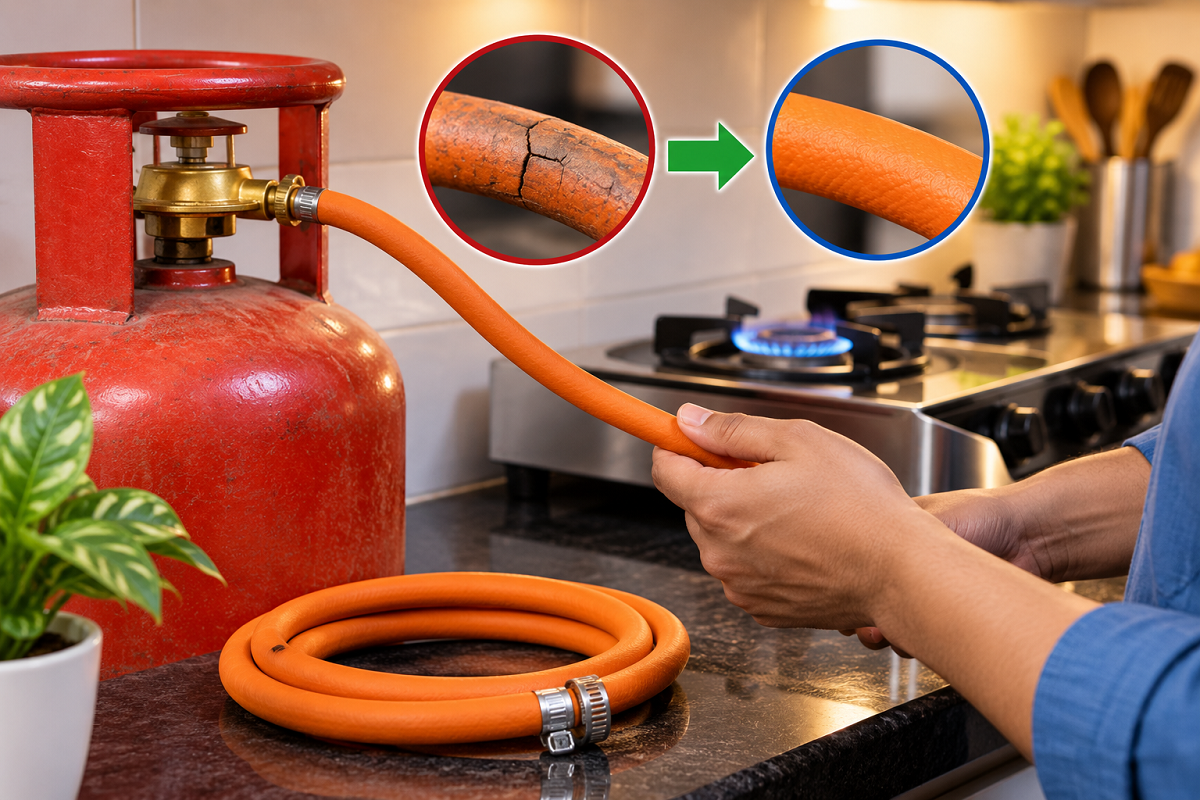
Using an LPG cylinder safely involves much more than simply checking the cylinder or ensuring that the regulator is functioning properly. One small component in the kitchen can also play a major role in preventing gas leaks and accidents: the safety hose that connects the LPG cylinder to the gas stove.
Many households continue using the same LPG pipe for years without paying much attention to its condition. While consumers generally remember to replace an empty cylinder, the connecting hose is often overlooked even though it is continuously exposed to heat, bending, pressure and daily wear.
Gas companies have advised consumers to inspect LPG safety hoses regularly and replace them when they become old or damaged. According to the safety guidance highlighted in the source article, the typical usable life of an LPG safety hose is around five years.
Why Should an LPG Safety Hose Be Replaced After Five Years?
The safety hose acts as the link between the gas regulator and the cooking appliance. Since LPG passes through this pipe whenever the stove is used, deterioration in the hose can increase the possibility of leakage.
Over time, the material of the pipe may lose flexibility and become weaker. Small cracks, cuts or other signs of deterioration can develop, especially when the hose is exposed to heat or has been bent repeatedly.
Gas companies have therefore advised customers to consider replacing the hose once it reaches around five years of use.
However, consumers should not treat five years as a reason to continue using a visibly damaged pipe. If cracks, cuts, stiffness, burns or any other defect are noticed earlier, the hose should be replaced immediately.
Do Not Wait for the Five-Year Period If the Pipe Looks Damaged
The five-year guidance is essentially a maximum-use safety reference, not a rule that consumers should wait for five years regardless of the pipe's condition.
A hose can become unsafe before that period depending on how it has been installed, how frequently the stove is used and the conditions inside the kitchen.
Consumers should therefore make a habit of visually checking the pipe from time to time.
Look carefully for unusual bending, cracks, cuts, burn marks, loosened connections or any visible deterioration. Particular attention should also be paid to the points where the pipe connects to the regulator and gas stove.
Any sign of damage should be taken seriously.
Use a Standard LPG Safety Hose
When replacing the gas pipe, consumers should avoid purchasing an unverified or low-quality product merely because it is cheaper.
The replacement hose should meet the appropriate safety standards. Consumers are advised to check for the ISI mark and purchase the product from a reliable or authorised source.
Using the correct safety hose can significantly reduce risks associated with poor-quality material or improper fittings.
It is also important to make sure that the pipe is properly connected after replacement and is not unnecessarily stretched, twisted or positioned too close to a flame or hot cooking surface.
Regularly Check the Regulator and Stove Connections
LPG safety is not limited to the connecting hose alone. The regulator, stove fittings and connection points should also be examined periodically.
Loose fittings can potentially allow gas to escape even when the pipe itself appears to be in good condition.
Households can periodically request an authorised technician or gas distributor representative to inspect the LPG setup, particularly if the connection is old or any component appears damaged.
Regular inspection becomes even more important in kitchens where the cylinder and stove are used heavily every day.
What Should You Do If You Smell Gas?
A gas smell should never be dismissed as a minor issue.
If there is a suspected LPG leak, avoid lighting matches, candles or cigarettes and do not operate electrical switches that could potentially create a spark.
Turn off the regulator if it is safe to do so and improve ventilation by opening doors and windows.
Consumers should then contact their authorised LPG distributor or emergency support service for assistance.
Trying to repair a damaged LPG hose or regulator without proper knowledge can create additional risks.
Simple LPG Safety Checks Every Household Should Follow
Consumers should periodically inspect the hose and confirm that there are no visible cracks, cuts or weak sections. The connection between the regulator, pipe and cooking stove should remain secure.
The hose should also be kept away from excessive heat, sharp edges and situations where heavy kitchen items could press against it.
When buying a new safety hose, consumers should check for recognised quality standards such as the ISI mark and avoid using makeshift pipes that are not designed for LPG connections.
The regulator and stove fittings should also be included in routine safety checks rather than focusing only on the cylinder.
A Small Replacement Can Prevent a Bigger Risk
An LPG safety hose may look like a minor part of the kitchen setup, but its condition is crucial for safe gas usage.
A pipe that has been used for years can gradually deteriorate without attracting much attention. Replacing it at the recommended interval, while also inspecting it regularly, can reduce the possibility of leakage caused by ageing or damaged material.
Consumers who cannot remember when their LPG hose was last replaced should check it carefully and consult their gas distributor if necessary.
Regular inspection, timely replacement and the use of certified components can make everyday LPG use considerably safer for households.