
Trending
Mystery of Krishna's Death: What happened to Lord Krishna's body after his death? Discover the mysterious story from the Mahabharata here
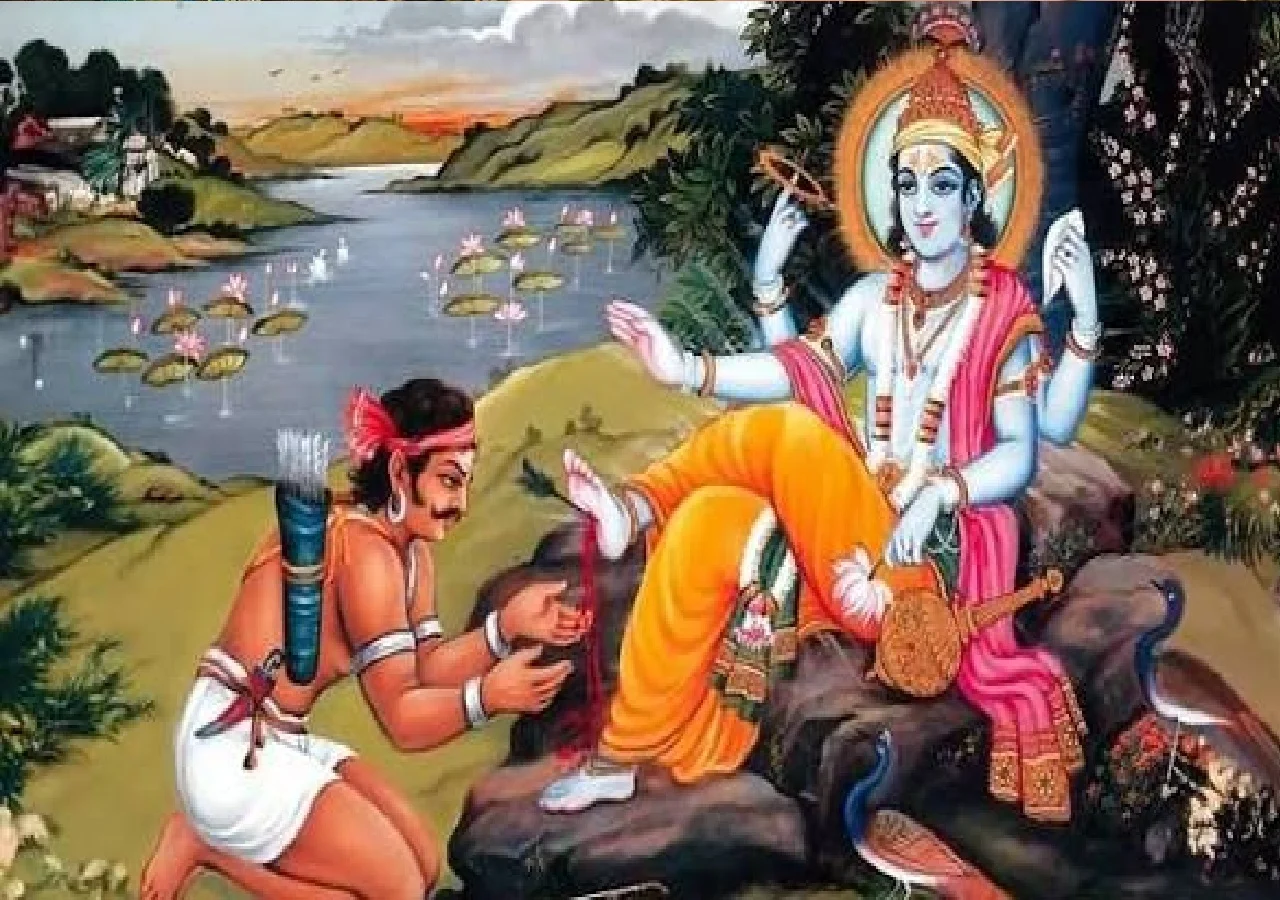
What Happened to Lord Krishna After His Departure? The Mahabharata Story of His Final Moments
Lord Krishna is one of the most revered figures in Hindu tradition. Stories about his childhood in Gokul and Vrindavan, his role in the Mahabharata, his friendship with Arjuna and his teachings in the Bhagavad Gita have been passed down for generations.
Yet one part of Krishna's story continues to fascinate devotees: How did Lord Krishna leave the mortal world, and what happened afterward?
Traditional accounts associated with the Mahabharata describe a sequence of events beginning with the destruction of the Yadava clan and culminating in Krishna's departure from the earthly realm. The story also involves Gandhari's curse, a hunter named Jara and Arjuna's arrival after the tragedy.
Here is the story as described in Hindu religious tradition.
How Did Lord Krishna's Earthly Journey End?
According to the traditional narrative, the final phase of Krishna's earthly life came after a devastating conflict among the Yadavas.
Following the destruction of the Yadava clan, Krishna went towards the region of Prabhasa. He eventually rested in a secluded place beneath a tree.
It was here that an unexpected incident occurred.
A hunter named Jara was moving through the area when he noticed Krishna from a distance. According to the story, the hunter mistook Krishna's foot for part of a deer and fired an arrow towards it.
Only after approaching his target did Jara realise that he had made a terrible mistake.
Hunter Jara Asked Krishna for Forgiveness
Jara was reportedly overcome with fear and remorse when he discovered that the person struck by his arrow was Krishna.
Believing himself responsible for a grave act, the hunter asked Krishna to forgive him.
Krishna, however, did not respond with anger.
According to the religious narrative, Krishna reassured Jara and forgave him, recognising that the hunter had not deliberately intended to harm him.
This moment is often interpreted spiritually as an illustration of Krishna's compassion and acceptance of the predetermined end of his earthly role.
Following the incident, Krishna gave up his mortal form and departed from the earthly world.
In devotional belief, this is understood not simply as an ordinary human death but as the conclusion of Krishna's divine incarnation on Earth and his return to his divine abode.
What Does Gandhari's Curse Have to Do With Krishna's Departure?
The events leading to the destruction of the Yadavas are also traditionally connected with Gandhari, the mother of the Kauravas.
The Mahabharata war resulted in the deaths of Gandhari's sons and caused enormous destruction.
According to the epic tradition, Krishna later met the grieving Gandhari. Overwhelmed by the loss of her children, she blamed Krishna for not preventing the catastrophic war despite possessing the power to intervene.
In her grief, Gandhari cursed Krishna and the Yadava clan.
The curse foretold that just as the Kauravas had destroyed one another, the Yadavas would eventually face destruction among themselves.
Krishna accepted the curse.
Years later, according to the narrative, internal conflict among the Yadavas led to their downfall, bringing Gandhari's words to fulfilment.
The Destruction of the Yadava Clan
The end of the Yadava dynasty forms an important part of the events surrounding Krishna's departure.
Instead of being defeated by an outside enemy, the Yadavas became involved in a destructive conflict among themselves.
The violence eventually devastated the clan.
After witnessing these events and recognising that his earthly mission was approaching its conclusion, Krishna withdrew from the scene.
His elder brother Balarama also departed from the mortal world according to the traditional account.
Krishna then went alone into a quiet area, where the encounter with Jara eventually took place.
Krishna's Final Moments Under a Tree
Traditional descriptions portray Krishna as resting beneath a tree in a meditative or yogic state.
Jara, unaware of Krishna's identity from a distance, saw his exposed foot and mistakenly believed he had spotted an animal.
He fired his arrow.
When he came closer and discovered what had happened, the hunter was devastated.
Krishna's response is one of the most significant elements of the story. Rather than condemning Jara, he comforted and forgave him.
Krishna then relinquished his earthly body.
For devotees, this event carries a deeper spiritual meaning. Krishna is regarded as an incarnation of Lord Vishnu, so his departure is understood within Hindu belief as the completion of an avatar's earthly purpose rather than merely the death of a mortal person.
What Happened to Krishna's Body?
Another question frequently associated with this story concerns Krishna's physical remains.
The Mahabharata's Mausala Parva describes the aftermath of the destruction of the Yadavas and Krishna's departure.
After learning about the catastrophe, Arjuna travelled to the region.
The loss was deeply personal for him. Krishna had been much more than an ally during the Mahabharata war. He was Arjuna's friend, relative, charioteer and spiritual guide.
It was Krishna who delivered the teachings of the Bhagavad Gita to Arjuna on the battlefield of Kurukshetra.
Traditional accounts describe funeral rites being performed following the deaths of Krishna and other members of his family.
Thus, within the Mahabharata narrative, Krishna's earthly remains were treated according to funeral traditions after his departure.
Arjuna Arrived After Krishna's Departure
When Arjuna learned about the destruction of the Yadavas and Krishna's departure, he travelled to the affected region.
The scene he encountered was profoundly different from the prosperous Yadava world he had previously known.
Krishna, who had guided Arjuna through some of the most important moments of his life, was no longer present in physical form.
Arjuna then became responsible for helping the surviving members of Krishna's family and dealing with the aftermath of the catastrophe.
The episode marks a major turning point not only in Krishna's story but also in Arjuna's.
What Happened to Dwarka?
Krishna's departure is traditionally linked with another dramatic event—the end of Dwarka.
Hindu traditions describe the sea eventually engulfing Krishna's city after his departure.
Arjuna attempted to take surviving members of the Yadava families away from the region before the city was submerged.
The disappearance of Dwarka therefore becomes part of the broader narrative marking the conclusion of Krishna's era.
These events are also traditionally associated with the transition from Dvapara Yuga to Kali Yuga.
Why Krishna's Final Story Remains So Significant
The account of Krishna's departure is not simply a story about how his earthly life ended.
Within Hindu philosophy and devotional traditions, it represents the completion of a divine mission.
Krishna had played a decisive role throughout the Mahabharata narrative. He guided the Pandavas, advised rulers, attempted to prevent war through diplomacy and ultimately became Arjuna's charioteer and spiritual teacher at Kurukshetra.
The Bhagavad Gita's teachings on dharma, karma, devotion and the nature of the soul became one of the most influential parts of Hindu philosophy.
His physical departure therefore represents the closing of an extraordinary chapter in the epic.
The Spiritual Meaning of Krishna's Departure
For devotees, Krishna's departure from the mortal world is generally not understood in exactly the same way as an ordinary human death.
Krishna is worshipped as a divine incarnation, and therefore the episode is interpreted as his withdrawal from his earthly form after completing the purpose of his avatar.
The encounter with Jara, Krishna's forgiveness of the hunter, the destruction of the Yadavas and Arjuna's grief together form one of the Mahabharata's most poignant concluding sequences.
The story ultimately emphasizes a recurring theme found throughout the epic: even powerful kingdoms, families and earthly relationships are temporary.
Krishna's teachings, however, continue beyond his physical presence—which is why the story of his final moments remains an enduring part of Hindu religious tradition.