
Technology
AI Search vs Google Search: Which One Is Better for Answers, Research and Finding Reliable Links?
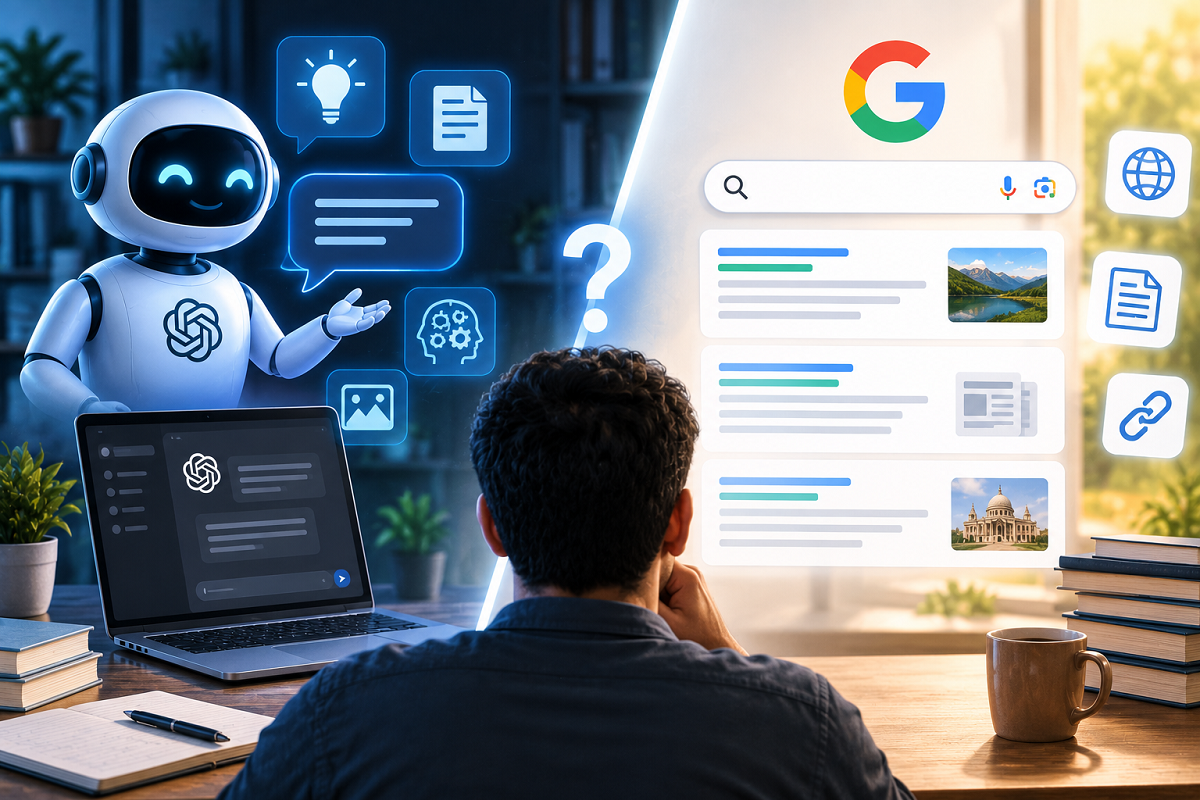
The way people search for information on the internet is changing rapidly. For years, online search usually meant opening Google, typing a few keywords and then going through a list of websites to find the right answer.
That approach still works, but AI-powered search tools are introducing a different experience. Instead of only showing links, platforms such as ChatGPT, Perplexity and AI-powered search features can often generate a direct response based on the user’s question.
Both approaches can be useful, but they are not identical. Google Search and AI Search work differently, and the better option often depends on what kind of information you are looking for.
How Google Search Works
Traditional search engines such as Google are designed to find relevant web pages based on a user’s query.
When you search for something, the search engine identifies pages that may match the words and intent of your query. It then ranks those results and displays links that it considers useful.
The user usually has to open one or more websites, read the information, compare sources and decide which answer appears most reliable.
In simple terms, a traditional search engine often helps you find the sources where an answer may exist.
This can be extremely useful when you want to visit an official website, compare multiple viewpoints, read the original report or check the latest information directly from the source.
How AI Search Works Differently
AI Search aims to reduce the amount of manual browsing required.
Instead of only returning a list of links, an AI-powered system tries to understand the meaning and intent behind the user’s question. It can then organize relevant information into a direct, conversational answer.
For example, if a user asks for a comparison between two products, an AI search tool may summarize their major differences, explain advantages and disadvantages and present the information in a structured way.
Some AI search services also provide source links or citations so users can check where the information came from.
This makes AI Search especially convenient for questions that require explanation rather than simply locating a website.
Direct Answer vs List of Links
This is one of the clearest differences between AI Search and traditional Google Search.
Google often presents multiple possible sources and allows the user to choose which pages to visit.
AI Search, on the other hand, generally tries to combine information and produce a ready-to-read response.
For basic questions, both methods may work well.
If you want the meaning of a word, a simple explanation of a concept or general information about a topic, AI can provide a quick answer while a traditional search engine can show multiple relevant pages.
The difference becomes more noticeable when the question is complicated.
AI Search Can Be Helpful for Complex Questions
AI-powered search can be particularly useful when a question requires information from several angles.
Suppose you want to understand the difference between two technologies, compare career options, evaluate two products or learn a complex topic in simple language.
Instead of opening many pages separately, AI can often summarize the key points and organize them into a more understandable format.
This can save time and make research easier, especially during the early stages of learning about a subject.
AI is also useful for follow-up questions because users can continue the conversation and ask for clarification without starting the search process again.
Traditional Search Is Better for Finding Specific Websites
There are many situations where a conventional search engine remains extremely useful.
If you want the official website of a government department, a company’s support page, a specific restaurant address, store timings or a particular news article, traditional search can often provide a faster path to the original source.
It is also useful when you want to browse several results instead of relying on a single summarized answer.
For users who prefer to examine the evidence themselves, opening multiple sources can provide more context.
AI Answers Can Sometimes Be Wrong
Convenience does not mean AI-generated answers should always be accepted without checking.
AI systems can occasionally generate incorrect, outdated or misleading information. They may sometimes present an inaccurate statement in a confident tone.
This type of error is often referred to as an AI hallucination.
That is why users should be especially careful when dealing with information related to health, finance, law, government rules, investments or other high-impact decisions.
In such cases, checking authoritative and recent sources remains important.
Google Results Also Need Verification
Traditional search is not automatically perfect either.
A search engine may show results from many types of websites, including pages with outdated, incomplete or poor-quality information.
The user still needs to decide which source deserves trust.
A government website, official company page, regulator, recognised news organisation or primary research source may be more reliable than an unknown website simply because it appears in the search results.
Therefore, source quality matters regardless of whether the information is found through Google or an AI tool.
Which Is Better for Latest News?
For breaking news and information that may change minute by minute, users should pay close attention to freshness.
Traditional web search and direct access to established news websites can be especially useful because they allow users to see the most recently published reports and compare updates from different sources.
AI Search can also provide current information when it is connected to live web search, but not every AI system has access to real-time data in every situation.
If a topic is changing quickly, checking the publication date and original source remains important.
Which Search Method Is Better for Research?
AI Search can be very effective as a starting point for research.
It can summarize a topic, explain difficult concepts, compare options and help users identify the most important questions they should investigate further.
However, serious research should not depend only on a generated summary.
Users should still open original sources, verify key claims and check whether the information is recent and credible.
A practical approach is to use AI for understanding and organization, then use search engines and original sources for verification.
Google Search May Be Better for These Tasks
Traditional search can be more convenient when the objective is to find something specific on the web.
This includes locating an official website, checking business information, finding a particular article, looking for current news, comparing several sources or navigating directly to an online service.
It is also useful when users want full control over which sources they read.
AI Search May Be Better for These Questions
AI Search can be more useful for questions that require explanation, comparison or synthesis.
For example, users may prefer AI when trying to understand the difference between two products, compare career choices, summarize a complicated topic or combine information from several sources into a simple explanation.
It can also be helpful when users want a conversational response rather than a page of search results.
So, Which One Should You Use?
There is no single winner for every type of search.
Google Search is highly useful for locating websites, browsing different sources and checking fresh information directly from publishers.
AI Search is often better for quickly understanding complex topics, comparing information and receiving a structured answer without opening several pages.
For important questions, the strongest approach may be to use both.
Start with AI when you want a simple explanation or comparison. Then verify important claims through reliable websites, official sources or traditional search.
The future of internet search is therefore unlikely to be only AI or only traditional search. Instead, users may increasingly combine both methods depending on whether they need a direct answer, a detailed explanation, a trusted source or the latest information.