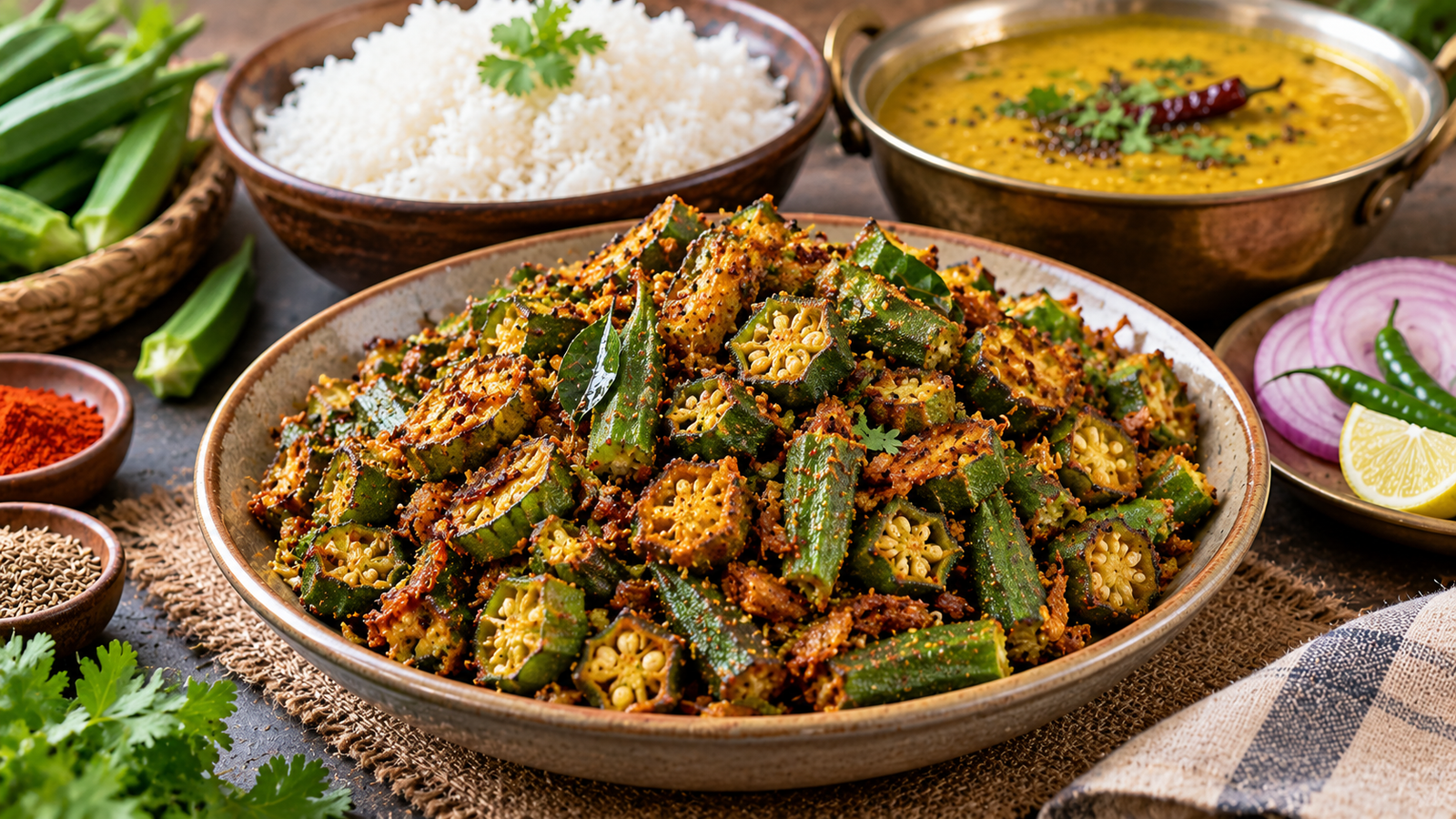
Bhindi Bhujia Recipe: If you love okra but are tired of preparing it the same way every time, crispy Bhindi Bhujia can bring a delicious change to your everyday meal. Thinly sliced bhindi cooked with simple Indian spices turns wonderfully crisp and makes an excellent accompaniment to dal-chawal, roti or paratha.
The recipe is uncomplicated and does not require an elaborate list of ingredients. The real secret lies in washing and drying the okra properly, slicing it thinly and cooking it without allowing excess moisture to make it sticky.
With a few simple techniques, you can prepare flavourful, crispy bhindi at home that works perfectly as a quick lunch or dinner side dish.
Why Try Crispy Bhindi Bhujia?
Regular bhindi sabzi is a favourite in many Indian households, but making the same preparation repeatedly can become monotonous.
Bhindi Bhujia offers a different texture.
Instead of a soft or gravy-based preparation, the okra is cooked until it becomes lightly crisp. Spices coat every piece, creating a savoury and slightly tangy flavour.
It pairs particularly well with simple dal and steamed rice because the crunchy bhindi provides a pleasant contrast to the soft rice and creamy dal.
Ingredients for Crispy Bhindi Bhujia
You will need:
- 500 grams fresh bhindi or okra
- 2 tablespoons cooking oil
- ½ teaspoon cumin seeds
- ½ teaspoon turmeric powder
- 1 teaspoon coriander powder
- ½ teaspoon red chilli powder
- ½ teaspoon roasted cumin powder
- ½ teaspoon amchur or dry mango powder
- ¼ teaspoon garam masala
- Salt according to taste
- 1 finely chopped green chilli, optional
- 1 teaspoon lemon juice, optional
The quantity of chilli can be adjusted depending on how spicy you want the bhujia.
Step 1: Wash and Completely Dry the Bhindi
This is the most important step if you want to avoid sticky okra.
Wash the bhindi thoroughly under running water and spread it over a clean kitchen towel. Pat each piece dry and allow any remaining surface moisture to disappear.
Do not start chopping while the okra is still wet.
Excess water can increase the slimy texture that many people dislike in cooked bhindi.
For the best results, wash the vegetable well in advance and allow it to dry naturally before slicing.
Step 2: Slice the Okra Thinly
Remove the top and tip of each bhindi.
Next, cut the okra lengthwise into thin strips. You can also make thin diagonal pieces if you prefer.
The thinner pieces provide more surface area for roasting, helping the bhindi develop a crisp texture.
Try to keep the pieces roughly similar in size so that they cook evenly.
Step 3: Heat the Pan Properly
Place a wide, heavy-bottomed pan or kadai over medium heat and add oil.
Once the oil becomes hot, add cumin seeds and let them crackle.
If using green chilli, add it at this stage and sauté briefly.
Now add the sliced bhindi and mix gently so that the oil coats the pieces evenly.
A wide pan works better than a small deep pan because it prevents the okra from piling up and steaming in its own moisture.
Step 4: Cook the Bhindi Uncovered
Cook the bhindi over medium heat without covering the pan.
This step makes a significant difference.
Covering the pan traps steam, and that moisture can make the okra softer and stickier. Leaving it uncovered allows excess moisture to evaporate.
Stir occasionally, but avoid continuously moving the bhindi around because the pieces can break as they cook.
After several minutes, you should notice the okra becoming drier and slightly crisp around the edges.
Step 5: Add the Spices
Once the bhindi has lost most of its moisture, add turmeric, coriander powder, red chilli powder and roasted cumin powder.
Mix gently until the spices are evenly distributed.
Continue cooking over medium to low heat until the okra develops a roasted texture.
Add salt when the bhindi is nearly cooked rather than at the very beginning. Salt can encourage vegetables to release moisture, so adding it later can help when your goal is a drier preparation.
Step 6: Give It a Tangy Finish
When the bhindi is crisp and properly cooked, add amchur powder and a small amount of garam masala.
Mix gently and switch off the heat.
For additional tanginess, squeeze a little lemon juice over the finished bhujia just before serving.
Do not add lemon juice too early, as additional liquid can soften the crisp texture.
How to Make Bhindi Extra Crispy
Getting the texture right is easier if you follow a few basic rules.
First, the bhindi must be completely dry before it is chopped. Even a small amount of surface moisture can affect the final result.
Second, avoid overcrowding the pan. If you are preparing a large quantity, using a wider pan or cooking in batches can produce better results.
Third, don't cover the pan while cooking.
Finally, allow the bhindi enough time to roast over controlled heat. Very high heat can burn the spices and exterior before the vegetable cooks properly.
Can You Add Onion?
Yes. If you enjoy the combination of onion and bhindi, thinly sliced onions can be included.
However, onions release moisture while cooking, so they can slightly change the texture.
For a predominantly crispy bhujia, you can first cook the onions separately until they become golden and then combine them with the nearly finished bhindi.
This gives you the flavour of onion without introducing too much moisture during the initial roasting process.
A Little Besan Can Add More Crunch
For an even crispier variation, sprinkle a small amount of besan or gram flour over the sliced bhindi before cooking.
The besan absorbs some moisture and creates a light coating around the okra.
You don't need much. A tablespoon or two can be enough for a medium batch.
This variation works particularly well if you want the dish to feel more like a crispy snack-style bhindi while still serving it as part of a regular meal.
What to Serve With Bhindi Bhujia
Crispy Bhindi Bhujia tastes especially good with dal and steamed rice.
The combination works because every element provides a different texture—the dal is creamy, rice is soft and the bhindi adds crunch.
You can also serve it with:
Roti or phulka, paratha, khichdi, curd rice or a simple curd-and-roti meal.
Add pickle, papad and sliced onions on the side, and an everyday meal can quickly become much more satisfying.
Common Mistakes That Can Make Bhindi Sticky
Sticky bhindi is usually the result of excess moisture.
Chopping the vegetable immediately after washing is one of the most common mistakes.
Another is covering the pan while cooking.
Frequent stirring can also break the okra and release more of its naturally sticky substance.
The easiest formula to remember is: dry the bhindi thoroughly, use a wide pan, cook uncovered and stir only when necessary.
An Easy Upgrade for Everyday Dal-Chawal
Crispy Bhindi Bhujia does not require complicated preparation, yet it can completely change the experience of a simple meal.
Start with fresh, completely dry okra, slice it thinly and roast it patiently with everyday spices. Finish with amchur or lemon for a slightly tangy flavour.
The result is a bhindi dish that is crisp around the edges, well-spiced and full of flavour.
So, if regular bhindi sabzi has become boring, try this crispy version the next time you make dal-chawal. It is an easy way to add both crunch and flavour to an everyday homemade meal.