
Business
Delhi Rooftop Solar Plan: 2.30 Lakh Homes to Get 3 kW Systems, Subsidy Support Up to ₹1.56 Lakh
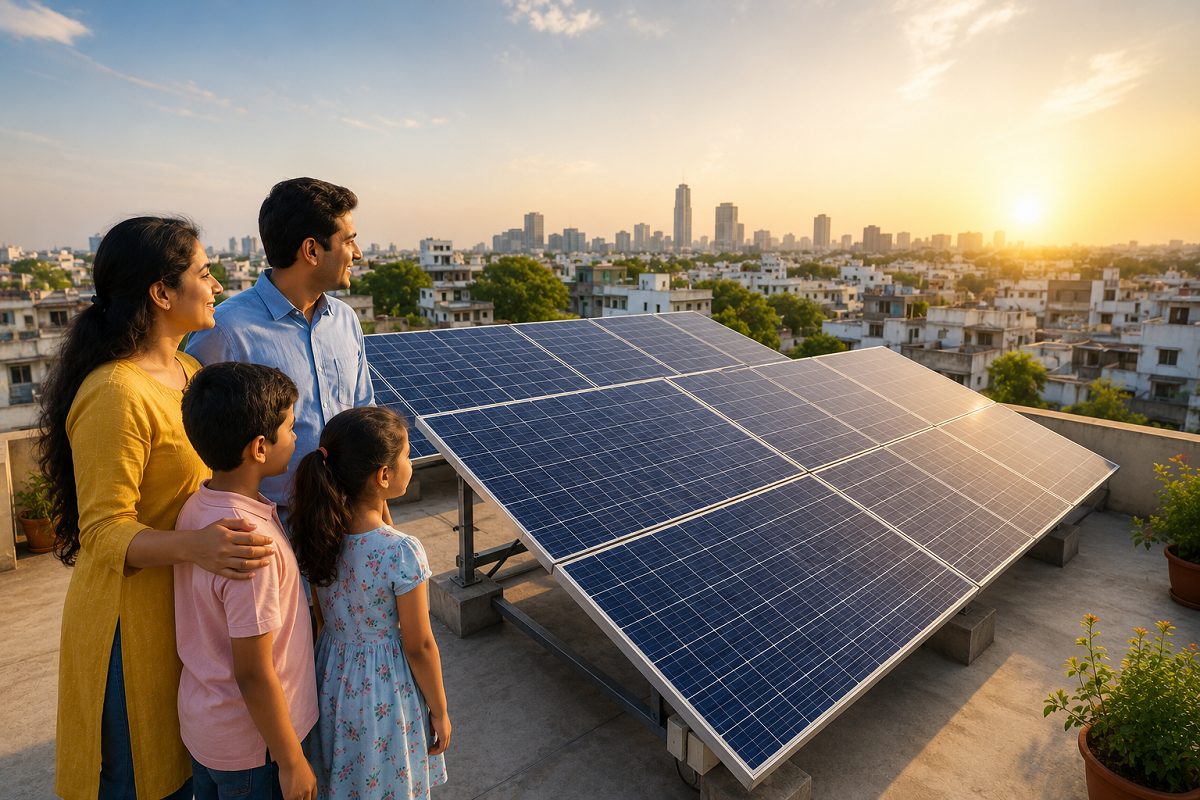
Delhi households could soon see a major expansion of rooftop solar installations under the PM Surya Ghar Muft Bijli Yojana. The Delhi government has approved a plan aimed at installing 3 kilowatt (kW) rooftop solar systems on 2.30 lakh eligible homes across the national capital.
The initiative is designed to reduce household dependence on conventional grid electricity while helping families lower their power expenses over the long term. According to the plan outlined in the source report, eligible consumers will not have to arrange a large upfront payment before the solar system is installed.
The central government provides subsidy support of up to ₹78,000 under the PM Surya Ghar scheme for eligible rooftop solar installations. The Delhi government is also expected to provide capital subsidy support of up to ₹78,000.
Together, the two components could provide eligible households with subsidy support of up to ₹1.56 lakh, subject to the applicable scheme conditions and actual system cost.
The government has set a target of covering 2.30 lakh eligible households by March 2027.
3 kW Rooftop Solar Systems Planned for Eligible Homes
The programme focuses on installing rooftop solar systems with a capacity of 3 kW.
A system of this size can generate a meaningful portion of a household's electricity requirements, although actual generation will depend on factors such as available rooftop area, sunlight, weather, system efficiency and installation conditions.
The programme is expected to be particularly beneficial for households whose average monthly electricity consumption is up to 400 units.
By producing electricity directly from their rooftops, participating households could reduce the amount of power they need to draw from the conventional electricity network.
The objective is therefore broader than providing short-term relief on electricity bills. The programme also seeks to turn residential properties into small-scale producers of clean energy.
Central Government Subsidy Can Go Up to ₹78,000
Financial support is one of the most important features of the rooftop solar programme.
Under the PM Surya Ghar Muft Bijli Yojana, the central government provides a subsidy of up to ₹78,000 for eligible rooftop solar installations, depending on system capacity and prevailing scheme rules.
The Delhi government is also expected to provide capital subsidy assistance of up to ₹78,000.
If the maximum benefits under both components apply, the combined support could reach:
Central subsidy: Up to ₹78,000
Delhi government support: Up to ₹78,000
Potential combined assistance: Up to ₹1.56 lakh
The actual financial assistance available to an individual household would depend on eligibility, installation cost and the applicable terms of the programme.
No Advance Payment Planned for Eligible Consumers
Another important feature of the Delhi initiative is its proposed installation mechanism.
Eligible consumers are not expected to be required to make an advance payment before getting the rooftop solar system installed, according to the source report.
The installation process is expected to be facilitated through the government-backed mechanism.
If there is a difference between the overall cost of the rooftop solar system and the available subsidy, the report says the state government plans to address that gap.
This approach could make rooftop solar more accessible to households that might otherwise hesitate because of the initial installation expense.
Households Using Up to 400 Units Could Benefit
The programme is expected to have a particularly noticeable impact on households consuming up to 400 units of electricity per month on average.
A 3 kW rooftop solar installation could generate part of the electricity required for everyday household needs, thereby reducing dependence on power purchased from the grid.
However, consumers should not assume that every 3 kW installation will produce exactly the same amount of electricity.
Solar generation varies depending on several conditions, including the orientation and size of the roof, shading from nearby buildings or trees, seasonal sunlight and equipment performance.
Nevertheless, rooftop generation could provide long-term savings for households with suitable properties.
Government Targets 2.30 Lakh Installations by March 2027
The Delhi government has set an ambitious implementation deadline for the programme.
The target is to install rooftop solar systems on all 2.30 lakh eligible homes by March 2027.
Departments involved in the project are expected to accelerate the implementation process so that installations can be completed within the planned timeframe.
If the target is achieved, it would represent a significant expansion of residential rooftop solar capacity in the national capital.
Installing 3 kW systems across 2.30 lakh homes would also create substantial distributed solar-generation capacity across the city.
Rooftops Could Become Mini Power-Generation Sites
Traditionally, households have largely functioned as consumers of electricity supplied through the grid.
Rooftop solar changes that relationship.
A home fitted with solar panels can generate electricity during daylight hours and use the power produced to meet part of its own consumption requirements.
This distributed model can reduce household dependence on conventional electricity sources while increasing the share of renewable energy in the overall power system.
For a densely populated urban region such as Delhi, residential rooftops also represent valuable unused space that can potentially be utilised for clean-energy generation.
Solar Push Could Help Reduce Pressure on Conventional Power
The environmental implications of the programme are another important aspect of the initiative.
Increasing solar generation can reduce dependence on electricity generated from conventional energy sources.
Over the longer term, widespread adoption of rooftop solar could contribute to reducing pressure on the electricity network, particularly during periods of high daytime demand.
Greater use of renewable electricity could also support broader efforts aimed at reducing carbon emissions.
Delhi's air pollution challenge has several causes, and rooftop solar alone cannot solve it. However, expanding clean-energy generation can form one component of a wider transition towards lower-emission energy sources.
Lower Electricity Expenses Are a Key Goal
For households, the most immediate attraction is likely to be the possibility of reducing electricity expenses.
Once a rooftop solar system becomes operational, electricity generated on the property can meet part of the household's energy needs.
The exact financial saving will vary from one consumer to another because it depends on electricity consumption, solar generation, tariff structure and other applicable rules.
Households with moderate electricity consumption and suitable rooftops could potentially see a meaningful reduction in the amount of conventional electricity they need to purchase.
What Delhi Consumers Should Keep in Mind
Although the proposed benefits are substantial, consumers should verify their eligibility and the latest implementation rules before assuming that they will automatically receive a free 3 kW installation.
Subsidy amounts, technical eligibility, rooftop suitability, electricity consumption and other conditions can influence whether a household qualifies and how much assistance it receives.
Residents should also rely on official government channels when the application and installation process begins or expands. This can help them avoid misleading claims or individuals seeking unauthorised payments in the name of rooftop solar registration.
Delhi's Rooftop Solar Capacity Could See a Major Expansion
If 2.30 lakh eligible households are successfully covered, the programme could significantly increase the use of rooftop solar across Delhi.
The initiative combines household-level financial relief with a broader clean-energy objective: enabling residents to produce part of the electricity they consume.
With subsidies from both the Centre and Delhi government, a proposed no-advance-payment structure and a March 2027 installation target, the programme could make rooftop solar accessible to a much larger number of families.
For eligible households, the potential benefits extend beyond lower electricity expenses. Rooftop solar could also provide greater energy independence while allowing residents to participate directly in Delhi's transition towards renewable power.
Disclaimer: This article is intended for general informational purposes. Subsidy amounts, eligibility requirements, installation procedures and other conditions may be revised by the authorities. Consumers should verify the latest rules through official government channels before applying or making any financial commitment.