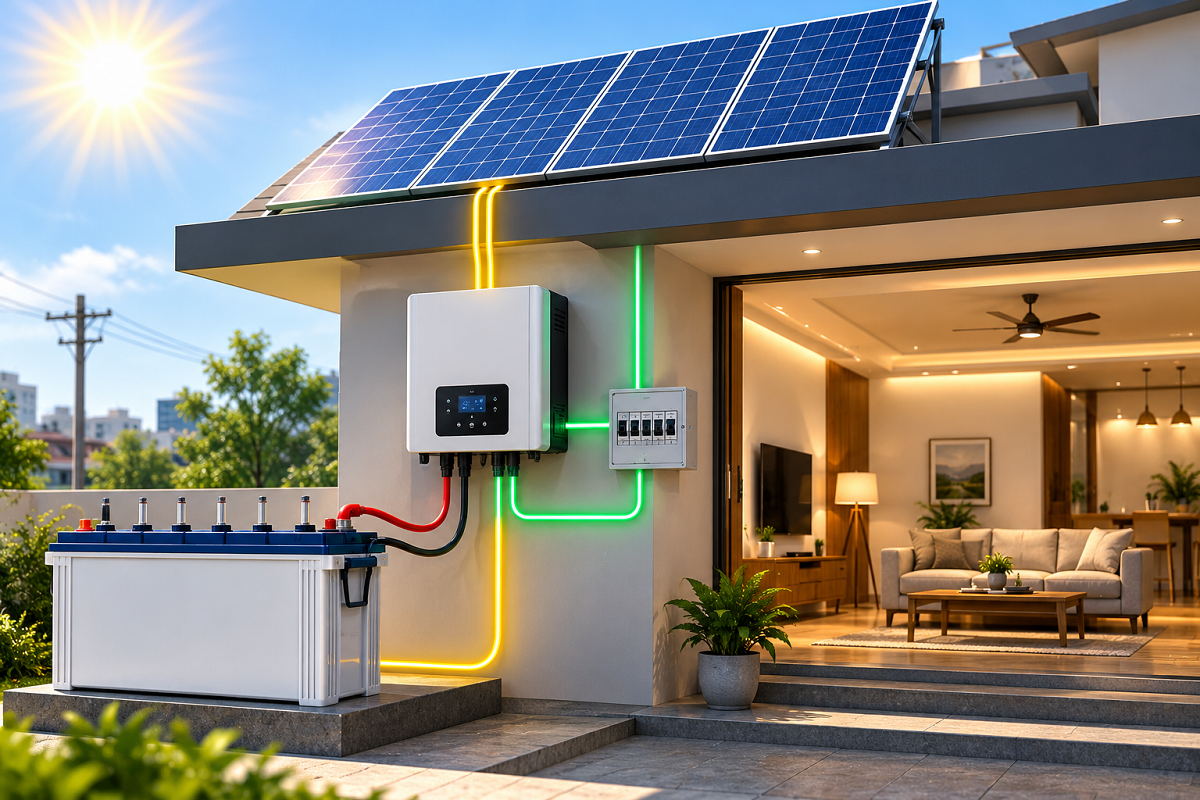
Solar panels are becoming increasingly popular among households looking to reduce electricity bills and depend less on conventional power supply. However, one common question comes up after installation: do you still need an inverter and battery once solar panels are installed?
The answer depends on the type of solar setup installed at your home and whether you need backup power during outages.
A solar panel can generate electricity from sunlight, but it does not store that electricity on its own. This is where the role of an inverter and, in some cases, a battery becomes important.
What Does a Solar Panel Actually Do?
Solar panels convert sunlight into electrical energy.
However, the electricity generated by solar panels is not always in the form directly required by common household appliances. This is why a solar inverter is generally used as part of the system.
The inverter converts the electricity produced by the panels into usable power for devices such as lights, fans, televisions and other home appliances.
During the daytime, when sufficient sunlight is available, solar panels can supply electricity to the house.
But solar panels themselves do not store electricity. Once sunlight disappears in the evening or at night, the panels stop generating usable solar power.
This is where the type of solar system becomes important.
Is a Battery Compulsory With Solar Panels?
No, a battery is not always necessary.
Homes using an on-grid solar system generally do not require a separate battery for normal operation.
In an on-grid setup, the solar system remains connected to the electricity grid. During the day, electricity generated by the solar panels can be used to run household appliances.
If the solar system generates more electricity than the house is consuming, the excess power may be sent to the grid, depending on the applicable system and metering arrangement.
Similarly, when solar generation is insufficient, electricity can be drawn from the grid.
Because the electricity grid acts as the alternative source of power, many on-grid systems operate without batteries.
Why Do Many On-Grid Systems Avoid Batteries?
Batteries add to the overall cost of a solar installation.
They also require additional space, compatible equipment and eventual replacement after their usable life ends.
For households mainly interested in reducing electricity bills and living in areas with reliable grid supply, a battery-free on-grid solar system can therefore be a practical choice.
However, there is one important limitation.
A standard on-grid solar system generally shuts down when grid electricity is unavailable. This safety feature means that having solar panels on the roof does not necessarily guarantee electricity during a power cut.
So, if uninterrupted power is your priority, relying only on a basic on-grid system may not be enough.
When Does a Solar Battery Become Useful?
A battery becomes useful when you want backup electricity during power cuts or when solar panels are not producing power.
For example, if electricity outages are common in your area and you want essential devices such as lights, fans, television or selected appliances to continue working, a solar system with battery backup can be more suitable.
During sunny hours, surplus electricity generated by the panels can be stored in the battery.
That stored energy can then be used later at night or during a power outage.
In this type of setup, the battery essentially acts as an energy reserve.
Do You Still Need an Inverter With a Battery?
Yes, an inverter remains an important part of most solar power systems.
The inverter manages the conversion of electricity generated by solar panels into a form that household devices can use.
In systems that include batteries, the inverter or a compatible hybrid inverter may also help manage the flow of energy between the solar panels, battery, home appliances and electricity grid.
Therefore, installing solar panels does not automatically eliminate the need for an inverter.
The main question is usually whether you need a battery in addition to the inverter.
What Is a Hybrid Solar System?
A hybrid solar system combines multiple components, including solar panels, an inverter, a battery and the electricity grid.
This arrangement can be suitable for households that want both lower electricity bills and backup power during outages.
During the daytime, solar energy can be used to run household appliances.
Any additional electricity may be stored in the battery, depending on how the system is configured.
When solar generation drops or a power cut occurs, the stored battery energy can be used to keep selected devices running.
The grid can also remain available as another source of electricity when required.
On-Grid vs Battery-Backed Solar System
The right choice depends mainly on your electricity needs.
An on-grid system may be suitable if power cuts are rare and your primary objective is reducing electricity expenses. Since batteries are usually not required, the initial cost can also be lower.
A battery-backed or hybrid system can be more useful in areas where outages happen frequently.
Although such systems are generally more expensive, they offer the added advantage of backup electricity.
Should You Keep Your Existing Home Inverter Battery?
If you already have a conventional inverter and battery at home, whether it can continue to be used after installing solar panels depends on the design and compatibility of the new solar system.
Not every existing inverter or battery is automatically compatible with every solar setup.
Before connecting old equipment to a new solar installation, it is advisable to check whether the inverter supports solar input and whether the battery specification matches the system requirements.
The Bottom Line
Installing solar panels does not necessarily mean that an inverter battery becomes unnecessary.
The inverter remains a key component because it helps convert and manage the electricity generated by the solar panels.
Whether you need a battery depends on the type of system you choose.
For a standard on-grid solar system, a battery may not be required if grid electricity is reliable. However, if you want electricity during power cuts or at times when solar generation is unavailable, a battery-backed or hybrid solar system may be the better option.
Before installing a system, consumers should consider local power-cut frequency, daily electricity usage, backup requirements and budget. Choosing the right combination of solar panels, inverter and battery can help ensure that the system delivers both savings and dependable power according to household needs.