
Technology
How Accurate Are Smartwatch Health Readings? Here’s What Those Heart Rate, Sleep and Calorie Numbers Really Mean
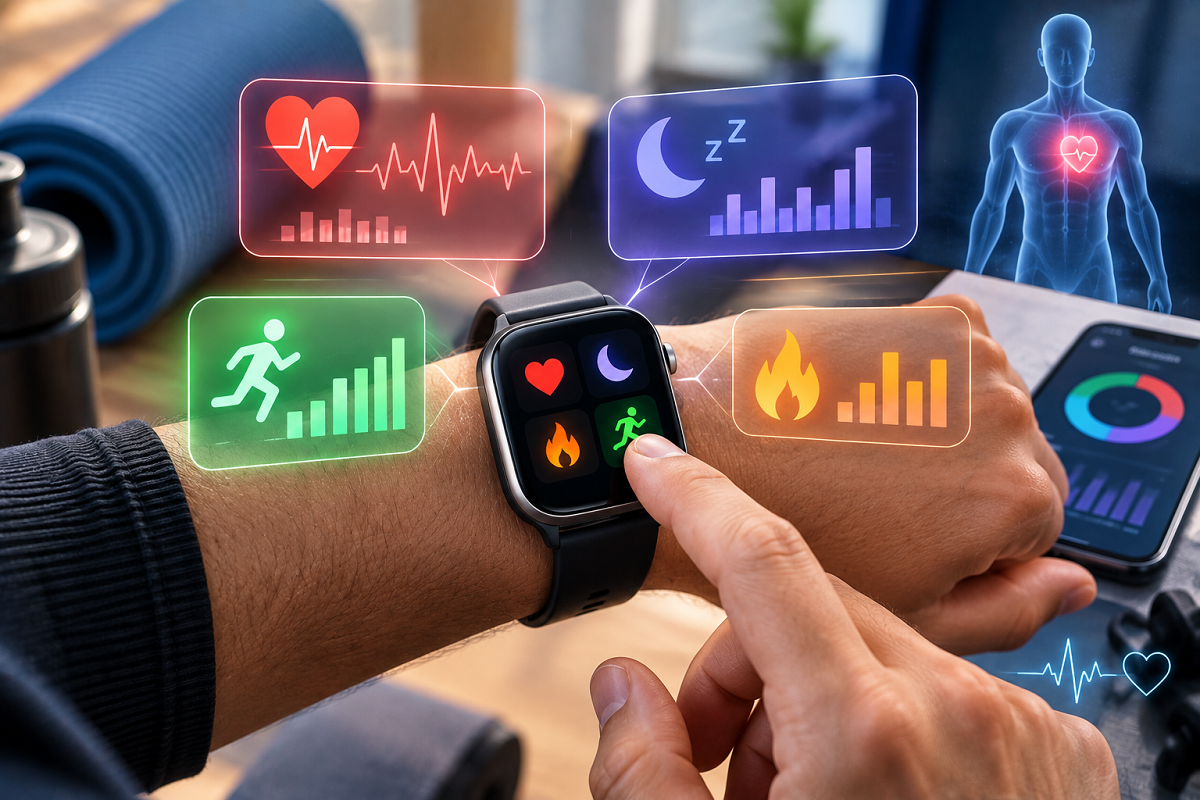
Smartwatches have evolved far beyond simply showing the time. Modern wearable devices can track heart rate, steps, workouts, sleep, calories, running speed and several other health-related indicators directly from the wrist.
But one important question remains: how accurate are these numbers?
The answer is that smartwatch readings can be useful, but not every figure shown on the screen should be treated as a perfectly precise medical measurement. Some values are measured more directly through sensors, while others are calculated using software, mathematical models and algorithms.
Understanding this difference can help users interpret smartwatch data more realistically.
Smartwatches Do Not Measure Everything Directly
According to the source article, researchers cited from the University of Michigan have highlighted that many smartwatch health metrics are generated by combining sensor signals with computer algorithms. Their findings were published in the journal Sensors.
This means a smartwatch may directly collect certain physical signals, but the number finally shown to the user can sometimes be an estimate based on those signals.
For example, a watch may detect changes in blood flow at the wrist and use software to calculate heart rate. In the same way, motion data can be analysed to estimate steps, exercise intensity or other activity-related information.
So, the number on the screen is often the result of both hardware and software working together.
How Do Smartwatch Sensors Collect Health Data?
Smartwatches usually contain several types of sensors.
Optical sensors can shine light into the skin and detect changes associated with blood flow. The device then uses this information to estimate heart rate.
Motion sensors detect how the body is moving. They can help the watch determine whether the user is walking, running, exercising or remaining inactive.
GPS can be used during outdoor activities to estimate distance, route, location and speed.
After collecting these signals, the smartwatch software processes the information and converts it into the health and fitness numbers displayed on the screen.
Which Smartwatch Readings May Be More Reliable?
Not all smartwatch measurements have the same level of accuracy.
Simpler metrics may often be more dependable under suitable conditions. These can include resting heart rate, heart rate during steady exercise, step count and outdoor speed.
These readings are usually based on sensor information that can be measured or estimated with relatively fewer assumptions.
However, even these figures can vary depending on how the watch is worn, the quality of the sensor and the activity being performed.
Calorie Burn and Sleep Data Can Be More Complex
Some smartwatch features involve much more calculation.
Calories burned, sleep stages, recovery scores, body composition and hydration-related estimates may depend on a combination of sensor data, personal details and the manufacturer's algorithms.
For example, calorie estimates may take into account factors such as movement, heart rate, age, weight, exercise type and other variables.
Because several assumptions may be involved, these readings should generally be viewed as estimates rather than exact values.
The source similarly notes that complex metrics such as calorie expenditure, different sleep stages, body water, recovery and body composition may rely more heavily on calculated estimates.
Why Can Two Smartwatches Show Different Results?
It is common for two smartwatches worn by the same person to produce different numbers.
One reason is that manufacturers may use different sensors, hardware designs and proprietary algorithms.
A company may process heart-rate or sleep data differently from another brand, even when both devices receive similar signals.
This is why one watch may report a different calorie count, sleep duration or recovery score compared with another device.
The difference does not automatically mean that one device is completely wrong. It may simply reflect differences in measurement methods and software interpretation.
The Way You Wear the Watch Can Affect Readings
Smartwatch accuracy can also be influenced by external conditions.
A loose-fitting watch may not maintain proper contact with the skin, which can interfere with optical sensor readings.
Excessive wrist movement can also create difficulties during certain activities.
According to the source, factors such as sweat, temperature, tattoos, skin tone and body characteristics can also influence sensor results. Different brands may therefore produce different readings for the same user.
For better results, users should generally wear the device according to the manufacturer's instructions and ensure that the watch sits properly on the wrist.
One Unusual Reading May Not Tell the Full Story
A smartwatch can sometimes show an unexpected heart rate, sleep duration or calorie figure.
However, a single unusual reading does not necessarily indicate a major health problem.
Wearable devices can occasionally produce inaccurate data because of movement, poor sensor contact or other temporary conditions.
What may be more useful is watching whether the same pattern appears repeatedly over several days or weeks.
Long-Term Trends Can Be More Useful Than One Number
One of the most practical ways to use smartwatch health data is to focus on patterns over time.
For example, if your resting heart rate gradually changes over several weeks, that trend may be more meaningful than one isolated reading.
The same approach can be used for activity levels and sleep patterns.
The source notes that researchers consider long-term trends more useful than focusing too heavily on a single day's number.
This is one of the key strengths of wearable technology: it can collect information continuously and help users notice changes that might otherwise be difficult to observe.
Smartwatch Data Should Not Replace Medical Tests
Although smartwatches can provide valuable health and fitness information, users should avoid treating every reading as a medical diagnosis.
A consumer wearable is not automatically equivalent to hospital-grade diagnostic equipment.
If a watch repeatedly shows unusual readings, or if a person experiences symptoms such as chest pain, fainting, severe shortness of breath or persistent irregular heart rhythm, appropriate medical evaluation is more important than relying only on the watch.
Smartwatch data can sometimes provide useful background information to discuss with a healthcare professional, but it should not be used as the sole basis for diagnosing a condition.
How to Get Better Smartwatch Readings
Users can improve the consistency of smartwatch measurements by wearing the device correctly.
The watch should generally fit securely without being excessively tight. Sensors should be kept clean, and the device should be positioned according to the manufacturer's guidance.
It is also useful to keep personal information such as age, height and weight updated in the companion app, as some calculated metrics may use this information.
Comparing trends within the same device over time can often be more useful than comparing a single reading between different brands.
The Bottom Line
Smartwatches are powerful tools for tracking everyday fitness and observing health-related patterns, but their numbers should be interpreted with the right expectations.
Heart rate, steps and some activity measurements can be relatively useful under normal conditions, while more complicated figures such as calorie burn, sleep stages, recovery and body composition may rely heavily on algorithms and estimates.
Instead of expecting every number to be 100% precise, users can get more value from a smartwatch by monitoring consistent trends over time.
A smartwatch can be a helpful health and fitness companion, but it should remain exactly that—a monitoring tool rather than a replacement for professional medical testing or diagnosis.