Food
How Long Can Tea Sit Before It Becomes Unsafe? Know When You Should Avoid Drinking Leftover Chai
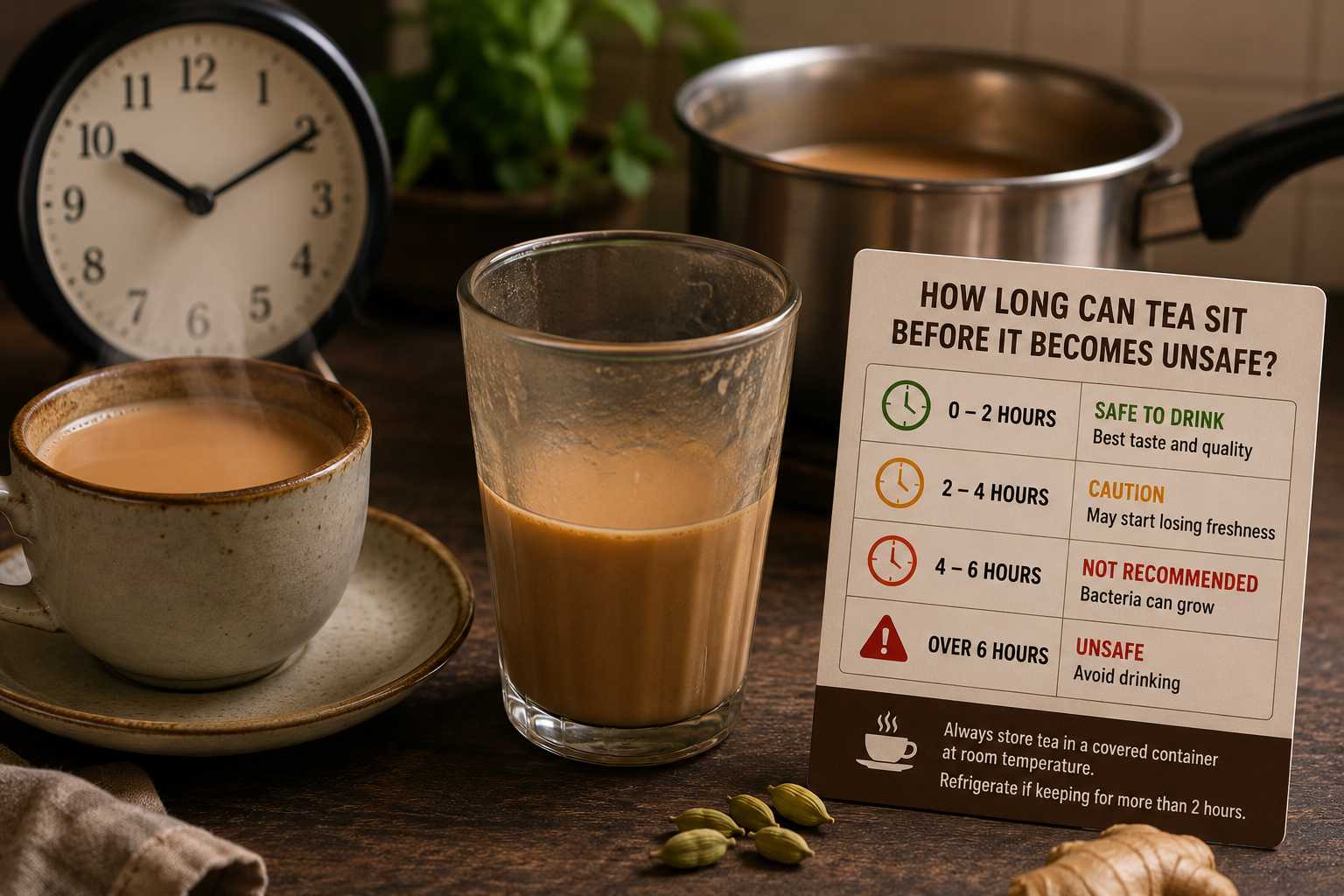
Reheating an old cup of tea may seem harmless, but milk-based chai left at room temperature for too long can become unsafe. Here’s how storage, temperature and ingredients affect your leftover tea.
For millions of people, a fresh cup of tea is an essential part of the morning routine. But busy schedules often lead to a common habit: preparing several cups of chai at once, leaving the extra tea in the kitchen and reheating it hours later.
While leftover tea does not suddenly turn into “poison” after a fixed number of hours, keeping milk tea at room temperature for an extended period can increase the risk of bacterial growth and spoilage. Reheating it later may not always make improperly stored tea safe again.
The risk depends on several factors, including whether the tea contains milk, how long it has been sitting out, the room temperature and how it was stored.
Why Can Old Milk Tea Become Unsafe?
Plain freshly brewed tea and traditional Indian milk chai are quite different from a food-safety perspective.
Milk chai typically contains dairy milk along with tea leaves, sugar and sometimes ingredients such as ginger, cardamom or other spices. Once prepared, it should be treated as a perishable beverage because it contains milk.
Leaving such tea at room temperature for several hours can create conditions in which microorganisms may multiply, particularly in warm weather.
This is why drinking milk tea that has been sitting on the kitchen counter for many hours is not a good idea, even if it looks normal.
Is Tea Really Dangerous After 3 or 4 Hours?
There is no scientifically universal point at which tea becomes “poisonous” exactly three or four hours after preparation.
Food safety depends heavily on storage conditions and temperature. A cup kept in a hot kitchen, for example, may deteriorate faster than one that is promptly refrigerated.
As a general food-safety principle, perishable foods and drinks containing milk should not be left at room temperature for long periods. In hot conditions, extra caution is advisable.
Therefore, instead of relying on a fixed three- or four-hour rule, it is safer to consider how the tea was stored.
If milk tea has remained at room temperature for several hours, particularly in warm weather, discarding it is generally a safer choice than reheating and drinking it.
Why Milk Chai Needs Extra Attention
Milk is the ingredient that makes leftover chai particularly sensitive to improper storage.
Dairy products provide moisture and nutrients that can support microbial growth when kept within temperatures favourable to bacteria.
Adding sugar does not make ordinary chai safe for extended room-temperature storage. Similarly, ingredients such as ginger, cardamom or cloves should not be considered substitutes for proper refrigeration.
Changes in smell, taste, texture or appearance can indicate that tea has spoiled. However, the absence of an unusual smell does not necessarily guarantee that a perishable drink has been stored safely.
Does Boiling Old Tea Again Make It Safe?
Many people assume that bringing leftover chai back to a boil will eliminate any risk. That is not a reliable food-safety strategy.
Heating can destroy many microorganisms, but reheating should not be used to compensate for improper storage. Certain microorganisms can produce substances that may remain problematic even after food or beverages are heated again.
Repeated heating can also negatively affect the flavour and overall quality of tea. Milk tea may develop a cooked or stale taste, while its texture can change after repeated heating and cooling cycles.
The safest approach is therefore to store leftover tea properly rather than relying on repeated boiling.
What About Green Tea and Herbal Tea?
Tea without milk generally carries a different level of spoilage risk than dairy-based chai, but that does not mean it should be left uncovered indefinitely.
Green, black and herbal teas can lose freshness, aroma and flavour as they sit. Exposure to air, environmental contamination and repeated temperature changes can further reduce their quality.
Repeated reheating may also affect some heat-sensitive compounds, although claims that reheating completely eliminates all of tea's health benefits are too broad.
If you are drinking green or herbal tea primarily for its flavour and beneficial plant compounds, freshly prepared tea is usually the better option.
How Should Leftover Tea Be Stored?
The easiest solution is to prepare only the amount of tea that you expect to drink immediately.
If you have made too much milk tea and want to save it, do not leave it sitting on the counter for several hours. Cool it appropriately and refrigerate it promptly in a clean, covered container.
When you want to drink it later, reheat only the quantity you need and avoid repeatedly cooling and reheating the same batch.
If the tea smells sour, looks curdled, develops an unusual texture or has otherwise changed noticeably, discard it.
Fresh Chai Is the Better Habit
Throwing away leftover tea can feel wasteful, especially when it contains milk, sugar, tea leaves and spices. A better way to reduce waste is to make smaller batches rather than keeping prepared chai at room temperature for hours.
Most importantly, there is no need to panic over claims that tea suddenly “turns into poison” after a specific number of hours. The genuine concern is improper storage, particularly when dairy is involved.
For regular chai drinkers, a simple rule works well: brew what you need, drink it fresh and refrigerate leftovers promptly instead of leaving milk tea out for hours and repeatedly reheating it.