
Technology
Instagram and Facebook Teen Rules: 2-Hour Daily Limit, Night Block and School-Time Controls Coming
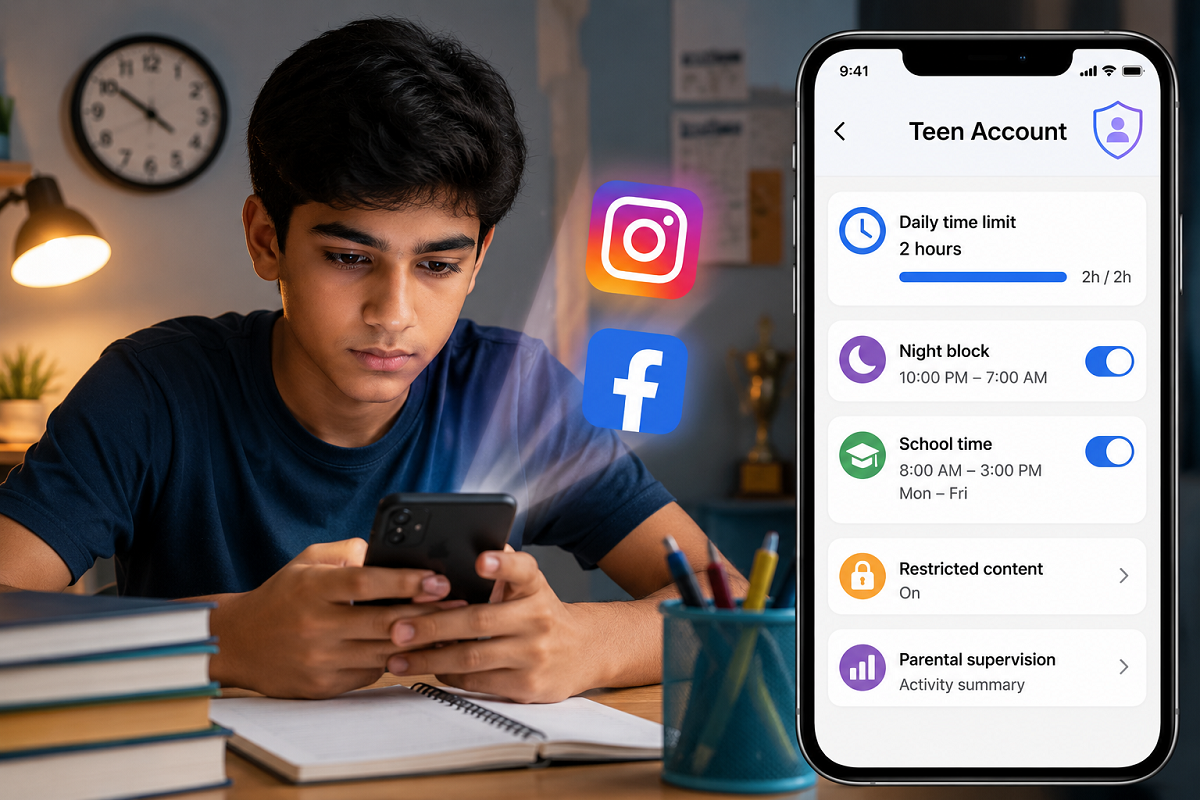
Instagram-Facebook Teen Safety Update: Meta is preparing major changes to the way teenagers can use Instagram and Facebook in the United States. Under a landmark legal settlement announced on August 26, 2026, users under 18 will face new default limits on screen time, overnight access and school-time notifications, while parents will receive stronger supervision controls.
The changes are part of a multistate settlement resolving allegations that Meta designed Instagram and Facebook in ways that encouraged excessive use among children and teenagers and failed to provide adequate safeguards for younger users. Meta has denied wrongdoing, and the agreement remains subject to court approval.
One of the most significant changes is a combined two-hour daily limit across Facebook and Instagram for users under 18. The new framework is intended to reduce prolonged scrolling and give parents more control over how much time teenagers spend on Meta's social platforms.
Teenagers Will Get a Two-Hour Daily Social Media Limit
Under the proposed rules, teenage users will be given a default maximum of two hours per day across Instagram and Facebook.
Importantly, the two-hour allowance will not apply separately to each platform. Time spent on both apps will be added together.
For example, if a teenager spends 80 minutes on Instagram and another 40 minutes on Facebook, the full two-hour allowance will have been used.
Meta says teenagers will not be able to simply disable the limit themselves. Changing or removing the restriction will require parental permission. The company also says it intends to count usage across multiple accounts where it can identify that they belong to the same person.
The measure is designed to address concerns about endless scrolling and other features that critics argue can encourage teenagers to remain on social media for long periods.
Instagram and Facebook to Be Restricted Overnight
Another important change is the introduction of a default Night Mode.
Teenagers covered by the new rules will face restrictions on Facebook and Instagram between 12 midnight and 6 a.m.
During this period, they will generally be unable to browse or post through features such as Feed, Stories, Explore and Reels.
The overnight restriction is aimed at discouraging late-night social media use, particularly when prolonged screen exposure can interfere with sleep schedules.
Parents will play an important role in managing these controls, making the system considerably stricter than a simple optional screen-time reminder.
School-Time Notifications Will Be Limited
Meta is also introducing restrictions designed to reduce distractions during school hours.
Under the settlement terms, push notifications for teenagers will generally be muted during school hours, with Meta describing a default window of 8 a.m. to 3 p.m.
However, certain important alerts will still be permitted. These can include direct messages as well as notifications concerning account security or user safety.
The intention is to make Instagram and Facebook less disruptive while students are attending classes, studying or participating in other school activities.
Break Reminders Will Appear During Continuous Use
The new safeguards will not rely only on a daily limit.
Meta says teenage users will also see prompts designed to interrupt extended periods of continuous scrolling.
A reminder will appear after every 15 minutes of uninterrupted use. Additional notifications will be shown when a teenager reaches 60 minutes and 90 minutes of total daily usage.
These prompts are intended to encourage users to consciously decide whether they want to continue using the platform instead of scrolling indefinitely.
Other Instagram and Facebook Features Will Also Change
The agreement goes beyond screen-time restrictions.
Meta will introduce additional protections affecting the type of experience teenagers receive on Facebook and Instagram.
According to details released by state authorities and Meta, younger users will receive stronger age-appropriate content protections. Certain engagement features, including the visibility of like and reaction counts, will also face tighter restrictions.
Teenagers will also have greater access to feed options that reduce reliance on algorithmic recommendations. Stronger age-verification measures are expected to help Meta identify accounts belonging to children who may have entered an incorrect age while signing up.
These measures are particularly important because social media companies have faced criticism over children registering accounts using false birth dates.
Why Is Meta Making These Changes?
The reforms come after years of legal scrutiny over the impact of social media on children.
US states accused Meta of designing features that encouraged compulsive use among young people while failing to adequately disclose or address potential risks. Authorities also raised concerns regarding the collection and handling of children's data.
Meta disputed the accusations and has not admitted wrongdoing as part of the settlement.
The broader multistate agreement has been described by several state attorneys general as worth up to approximately $17.1 billion, although different reports may describe the headline settlement amount differently depending on the components being included.
The financial settlement will be accompanied by major changes to Meta's products for younger users.
Do These Restrictions Apply to Children in India?
This is an important point for users outside the United States.
The newly announced settlement does not mean that every child worldwide will immediately receive a mandatory two-hour Instagram and Facebook limit.
The settlement relates to legal action brought by US states and territories, and the mandatory requirements apply within the jurisdictions covered by that agreement. The changes are also subject to final judicial approval.
Meta could eventually expand similar safety features to other countries, but no worldwide rollout should be assumed unless the company officially announces one.
Therefore, parents and teenagers in India should not interpret the development as an immediate nationwide ban or mandatory two-hour restriction on Instagram and Facebook.
Could Other Social Media Platforms Follow?
Meta has also publicly called on competing platforms such as TikTok and YouTube to introduce comparable protections for teenagers.
The company argues that restricting younger users on only one group of apps may simply push them toward competing social networks rather than reducing overall social-media use.
Under parts of the settlement framework, even stricter limits could apply if other major platforms adopt similar protections.
This could make the Meta agreement significant beyond Instagram and Facebook if it eventually encourages broader industry standards for teenage users.
What Parents Should Know
The biggest practical change is that parental approval will become more important in managing teenage social-media settings.
Instead of relying entirely on teenagers to voluntarily reduce screen time, Meta's new system places key restrictions on accounts by default and requires adult involvement before some protections can be relaxed.
If approved and implemented as planned, teenage Facebook and Instagram accounts in covered US jurisdictions will receive a two-hour combined daily limit, overnight access restrictions, reduced school-time notifications and regular break reminders.
For families concerned about excessive social-media use, the changes could represent one of the most substantial shifts yet in how major technology platforms design their services for younger users.
Note: The announced requirements are linked to a US legal settlement and remain subject to court approval. They should not be interpreted as an immediate global restriction on all Instagram and Facebook users under 18.