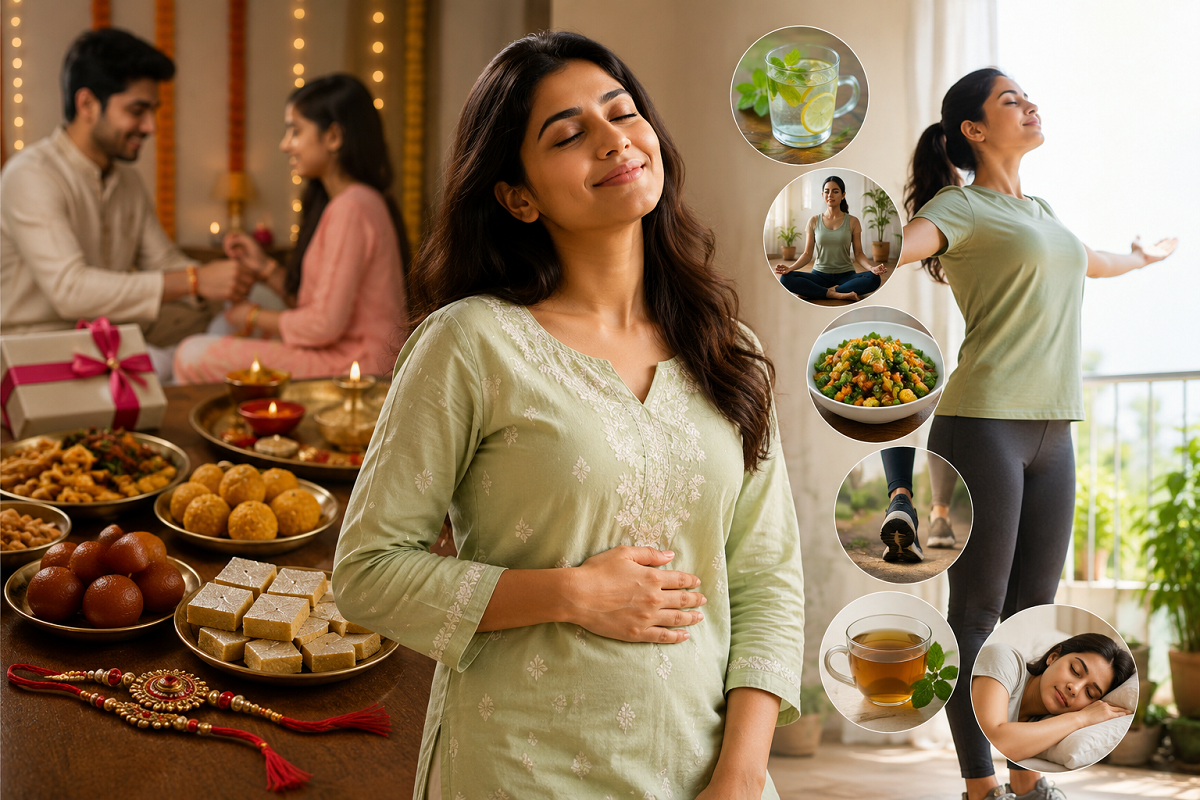
Raksha Bandhan celebrations are rarely complete without sweets, snacks and a table full of festive favourites. From mithai and pakoras to chaat and dahi bhalla, it is easy to keep eating while spending time with family without noticing how much food has been consumed.
The result may become apparent a few hours later. A heavy stomach, bloating, acidity, indigestion or mild nausea can make you regret that extra serving of sweets or fried snacks.
This is also when the idea of a quick “body detox” becomes popular. However, there is an important point to understand: the human body already has systems, particularly the liver and kidneys, that continuously process and eliminate waste. No juice, herbal drink or single food can magically remove sugar, fat or calories consumed during a festival.
What you can do is return to your normal routine, stay adequately hydrated and choose lighter, nutritious foods that support digestion and overall well-being.
Here are some practical steps to follow after a day of festive overeating.
1. Stay Hydrated, but Don't Force Too Much Water at Once
Drinking adequate water is one of the simplest things you can do after consuming a large amount of salty, sugary or rich food.
Hydration supports normal body functions, including the kidneys' role in maintaining fluid and waste balance. However, there is no need to suddenly drink several glasses of water if your stomach already feels uncomfortably full.
Instead, sip water regularly throughout the day.
The goal should be normal hydration rather than trying to “flush out” everything you ate. Drinking excessive amounts of water in a short period is unnecessary and can also be harmful.
2. Bring Fibre Back Into Your Diet
Festive meals are often loaded with refined carbohydrates, sweets and fried foods while being relatively low in fibre.
Your next meals can focus more on naturally fibre-rich foods.
Whole fruits such as apples, guava, pears, papaya and seasonal citrus fruits can be useful choices. Eating the whole fruit is generally preferable to turning it into juice because much of the beneficial fibre is retained.
Vegetables, whole grains, pulses and legumes can also contribute to your daily fibre intake.
Fibre supports normal bowel movements and digestive health. However, increase it gradually if you are not accustomed to a high-fibre diet, as suddenly consuming large quantities may worsen gas or bloating.
3. Choose Light and Simple Meals
If your stomach still feels heavy after the celebrations, there is little reason to follow one rich meal with another.
Return to simple, balanced foods according to your appetite.
Papaya, for example, provides fibre and can be included as part of a normal diet. Plain curd or yoghurt may also be suitable for people who tolerate dairy, providing protein along with beneficial live cultures in some varieties.
However, no particular combination, including papaya and yoghurt, should be viewed as a magical remedy for overeating.
People who experience discomfort, bloating or other digestive symptoms after consuming dairy should choose alternatives that suit them better.
4. Add More Vegetables to Your Next Meals
Vegetables can help restore balance after a calorie-heavy festival day.
Spinach, bottle gourd, okra, ridge gourd and other seasonal vegetables provide fibre along with vitamins, minerals and other nutrients.
Rather than skipping meals or following an extreme “detox diet,” consider returning to balanced portions containing vegetables, protein, whole grains or other minimally processed foods.
One day of overeating generally does not require several days of starvation or severe calorie restriction.
Going back to your usual balanced eating pattern is a more sustainable approach.
5. Coconut Water and Herbal Drinks Can Help With Hydration
Coconut water can be a refreshing drink and naturally contains electrolytes. It may be an option for some people who want an alternative to sugary beverages.
However, it is not necessary for everyone, nor should it be considered a detox drink that removes excess calories or sugar from the body.
Similarly, warm drinks prepared with ingredients such as ginger, fennel or cumin may feel soothing to some people. They can be consumed if you enjoy them and they agree with your digestive system.
The important distinction is that these drinks may support hydration or comfort, but they do not “cleanse” the body in a medical sense.
6. Take a Gentle Walk After Eating
Physical activity can also be useful after a heavy meal, provided you feel comfortable.
Instead of immediately lying down after eating, consider taking a gentle walk. Light movement after meals may support digestion and can also be helpful as part of regular blood-sugar management.
There is no need for an intense workout to compensate for everything you ate during Raksha Bandhan.
A sustainable routine matters more than trying to burn off one festive meal. Regular physical activity—such as walking for around 30 minutes on most days, depending on your health and fitness level—provides far greater long-term benefits than a one-day “detox workout.”
Don't Try to Compensate With Extreme Dieting
Feeling guilty after overeating can lead some people to skip meals completely the following day or rely only on juices and so-called detox drinks.
That approach is usually unnecessary.
One day of enjoying sweets and festive foods is unlikely to undo an otherwise balanced lifestyle. Simply return to your regular eating routine, pay attention to hunger and fullness cues, drink adequate fluids and prioritise nutritious foods.
People with diabetes or other conditions that require specific dietary management should follow the advice provided by their healthcare professional, particularly after consuming unusually large quantities of sweets or carbohydrates.
When Digestive Symptoms Need Medical Attention
Mild fullness or temporary indigestion after overeating may improve with time. But severe or persistent symptoms should not automatically be blamed on festive food.
Seek medical advice if you experience severe abdominal pain, repeated vomiting, persistent diarrhoea, chest pain, difficulty breathing, signs of dehydration or symptoms that are worsening rather than improving.
Ultimately, the best “detox” after Raksha Bandhan is not an expensive juice, supplement or restrictive diet. Give your digestive system time, stay normally hydrated, choose balanced meals, include fibre-rich foods and vegetables, and get back to regular physical activity.
Your body does not need a magical cleanse after enjoying a festival—it needs a sensible return to everyday healthy habits.