Technology
WhatsApp Safety Alert: Sharing PAN, Aadhaar or Bank Statements? One Mistake Could Put Your Financial Data at Risk
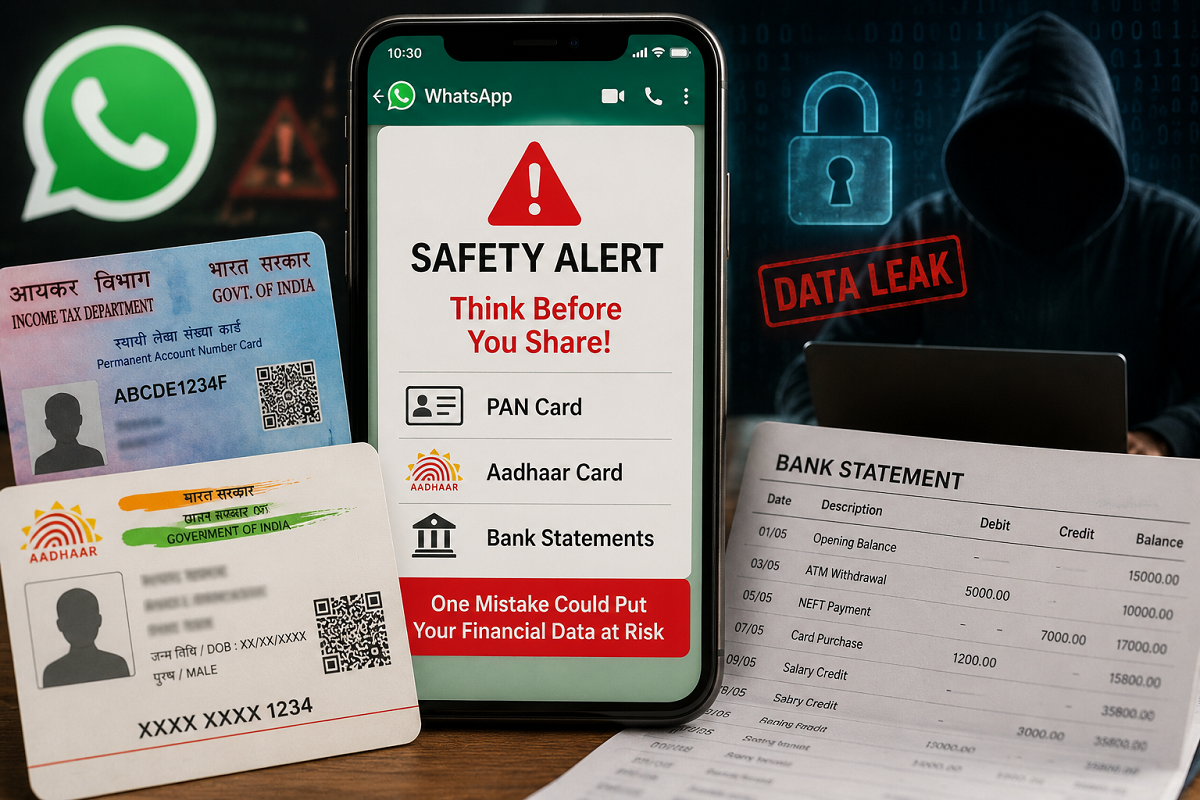
WhatsApp Safety Tips: PAN cards, Aadhaar copies and bank statements contain sensitive personal and financial information. Sending these documents casually on WhatsApp can expose you to identity theft and fraud if they reach the wrong person. Here’s how to share KYC documents more safely.
From opening a bank account to applying for a loan, insurance policy or other financial service, people are frequently asked to submit KYC documents. Because WhatsApp is convenient, many users simply take a photograph of their PAN card, Aadhaar or bank statement and send it through a chat.
The convenience, however, can come with privacy risks. Documents left in old chats, downloaded to another person's device or accidentally sent to the wrong number could expose information that criminals may misuse for impersonation or other fraudulent activities.
One point needs clarification: knowing your Aadhaar number alone does not allow someone to empty your Aadhaar-linked bank account. UIDAI specifically says that merely knowing an Aadhaar number or having a copy of an Aadhaar card is not sufficient to withdraw money from the linked bank account. (UIDAI)
The bigger danger arises when criminals obtain multiple pieces of information and combine them with phishing, OTP theft, fake KYC requests or other social-engineering techniques.
Why Sharing KYC Documents Carelessly Can Be Risky
A PAN card, Aadhaar document and bank statement can collectively reveal substantial personal information. A bank statement may additionally expose your account number, transaction history and other financial details.
Scammers can potentially use leaked information to make fraudulent applications more convincing, impersonate the victim or trick them into providing further credentials.
Therefore, before sending any KYC document, verify who is requesting it and why it is required. Avoid sending sensitive documents to unknown WhatsApp numbers simply because the person claims to represent a bank, loan company or government department.
Use Masked Aadhaar Whenever Appropriate
If an organisation accepts it, Masked Aadhaar can reduce unnecessary exposure of your Aadhaar number.
According to UIDAI, Masked Aadhaar hides the first eight digits of the Aadhaar number and displays only the final four digits. (UIDAI)
It can be downloaded through UIDAI's MyAadhaar services. UIDAI also confirms that an e-Aadhaar is a digitally signed, password-protected electronic copy and is valid like the physical Aadhaar document. (UIDAI)
VID Can Reduce the Need to Reveal Aadhaar Number
Another privacy feature provided by UIDAI is the Virtual ID or VID.
VID is a temporary, revocable 16-digit number linked to an Aadhaar number. It can be used instead of the Aadhaar number for supported authentication and e-KYC services, and UIDAI says the underlying Aadhaar number cannot be derived from the VID. (UIDAI)
This provides an additional option when a service supports VID-based verification.
New Aadhaar App Offers Selective Data Sharing
UIDAI's Aadhaar App also provides privacy-focused digital identity sharing. UIDAI says it supports consent-based selective data sharing, allowing users greater control over the identity information they provide. (UIDAI)
A UIDAI circular issued in April 2026 also states that Aadhaar credentials shown or shared through the Aadhaar App are legally valid for establishing identity. The app can share complete or partial identity details without transferring the 12-digit Aadhaar number in that process. (UIDAI)
7 Precautions Before Sending PAN, Aadhaar or Bank Documents
- Verify the recipient's identity and organisation through an official channel before sending anything.
- Never share an OTP, UPI PIN, debit/credit-card PIN, CVV or internet-banking password.
- Use Masked Aadhaar instead of displaying all 12 digits when it is accepted.
- Hide or redact unnecessary bank account and transaction information if the recipient does not require it.
- Avoid sending sensitive documents to unknown WhatsApp numbers received through unsolicited calls or messages.
- Prefer the organisation's official app, website or secure document-upload facility where available.
- Delete unnecessary copies from chats and devices once the purpose has been completed, while retaining anything you are legally or practically required to keep.
What If You Have Already Shared Documents With a Suspicious Person?
If you have only shared an Aadhaar number, don't assume that your bank account can automatically be accessed; UIDAI explicitly says that is not how Aadhaar-linked accounts work. (UIDAI)
However, if the recipient appears fraudulent, stay alert for suspicious calls, OTP requests, phishing links and unexpected banking activity. If financial fraud has actually occurred, report it promptly through India's official National Cyber Crime Reporting Portal. The portal also allows citizens to report suspicious identifiers such as WhatsApp numbers, phone numbers, email addresses and website URLs. (Cyber Crime Portal)
National Cyber Crime Reporting Portal
The Bottom Line
WhatsApp itself should not be treated as the sole problem—the key issue is where your documents ultimately go and who can access them. Aadhaar, PAN and bank documents should be shared only when genuinely required and with a verified recipient.
Using options such as Masked Aadhaar, VID and UIDAI's digital identity-sharing features can help reduce unnecessary disclosure of sensitive information.
Disclaimer: This article is intended for general cyber-safety awareness. If you suspect financial fraud or identity misuse, contact the relevant bank/service provider and use official cybercrime-reporting channels as soon as possible.