Fever often improves within a few days with rest, fluids and appropriate treatment, especially when it is linked to a common viral or bacterial infection. However, recovery does not always mean that every symptom disappears at the same time.
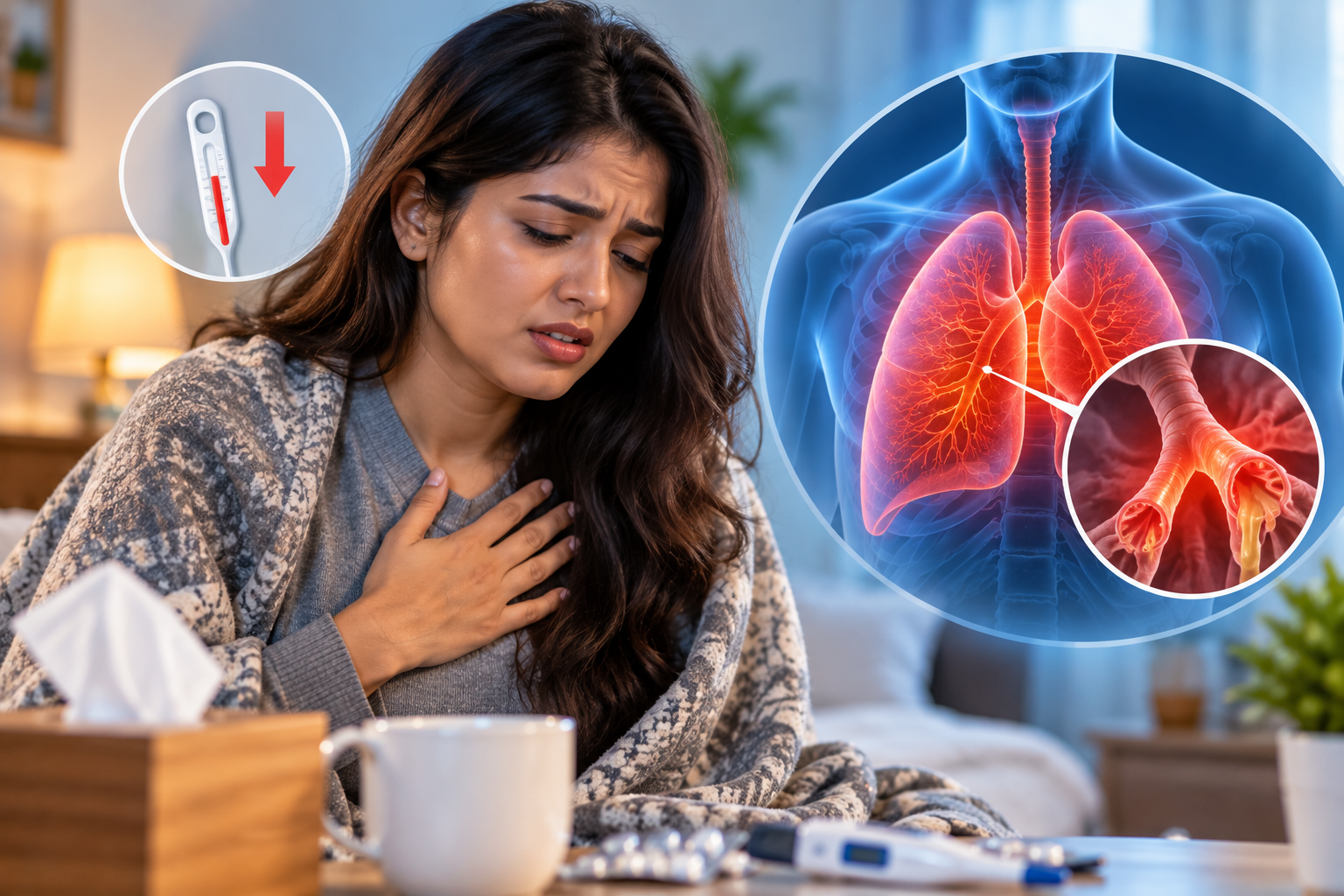
If fever has gone but chest tightness, heaviness, persistent cough or difficulty breathing continues, it should not always be dismissed as simple post-illness weakness. In some cases, these symptoms may indicate that the respiratory system is still affected and may need medical evaluation.
Why Can Chest Tightness Continue After Fever?
Chest discomfort after an illness can have several possible causes.
During a viral or bacterial infection, the airways and lungs may become inflamed. Even after the fever settles, this inflammation can take longer to improve.
Mucus may also remain in the respiratory tract, leading to a feeling of congestion or heaviness in the chest.
Some people may continue to experience coughing for several days after the infection has improved. This persistent cough can itself make the chest feel sore, tight or uncomfortable.
In other cases, the symptoms may suggest a complication that requires closer attention.
Could It Be Bronchitis or Pneumonia?
Respiratory infections such as flu and other viral illnesses can affect the airways and lungs.
Sometimes, inflammation continues even after the main infection appears to be resolving.
This may cause symptoms such as:
- Persistent cough
- Chest heaviness or tightness
- Shortness of breath
- Wheezing
- Tiredness while doing normal activities
In some people, such symptoms may be associated with conditions like bronchitis or pneumonia.
Pneumonia can develop when an infection affects the lungs more deeply. Symptoms may include worsening cough, breathlessness, chest pain, weakness and fever that returns after initially improving.
If symptoms are getting worse rather than gradually improving, medical advice should not be delayed.
Fever Returning Can Be an Important Warning Sign
A fever that disappears and then comes back strongly may be worth paying attention to, especially if it is accompanied by increasing cough or breathing difficulty.
A returning fever can sometimes mean that the body is still fighting an infection or that another complication has developed.
This does not automatically mean that someone has pneumonia or another serious condition, but it is a reason to consider medical evaluation rather than relying only on home treatment.
When Should You Seek Medical Help Quickly?
Certain symptoms should not be ignored after a fever.
Urgent medical attention is important if chest tightness is accompanied by severe breathing difficulty, strong or persistent chest pain, bluish lips or face, fainting, confusion, extreme weakness or coughing up blood.
Similarly, a person should seek prompt medical advice if shortness of breath is becoming worse, fever returns at a high level or even ordinary activities such as walking around the house cause unusual breathlessness.
These symptoms may indicate that the lungs or oxygen levels are being affected and should be assessed by a healthcare professional.
Do Not Assume Every Symptom Is Just Weakness
Fatigue after fever is common, particularly after a significant infection.
However, weakness and respiratory symptoms are not the same thing.
Feeling tired for a few days may be part of recovery, but ongoing chest pressure, worsening breathing problems or severe coughing deserve more attention.
Monitoring how symptoms change from one day to the next can be useful.
If the condition is steadily improving, recovery may simply be taking time. If symptoms remain unchanged for too long or become more intense, speaking with a doctor is a safer option.
Rest and Hydration Can Support Recovery
Adequate rest remains important after fever because the body may need additional time to recover even after body temperature returns to normal.
Drinking enough water and other fluids can also help prevent dehydration and may make mucus easier to clear.
A balanced diet that provides enough protein, vitamins and other nutrients can support recovery.
It may also be wise to return to strenuous physical activity gradually instead of immediately resuming intense exercise or demanding routines.
Avoid Taking Antibiotics Without Medical Advice
One important precaution is to avoid starting antibiotics or steroids without consulting a doctor.
Antibiotics do not work against viral infections and should only be used when a healthcare professional believes they are necessary.
Steroids can also have significant effects on the immune system and should not be taken casually for cough, chest congestion or breathing symptoms.
Self-medication can sometimes mask symptoms or delay the correct diagnosis.
Pay Attention to Your Breathing During Recovery
After an infection, observe whether your breathing is gradually returning to normal.
If you feel short of breath while performing activities that were previously easy, such as walking a short distance or climbing a few stairs, note whether the problem is improving or worsening.
Persistent or progressive breathing difficulty deserves medical attention.
The same applies if chest tightness becomes more noticeable at night, with activity or while lying down.
Recovery Can Take Time, but Warning Signs Matter
Not every cough or feeling of chest heaviness after fever indicates a serious illness. Respiratory symptoms can sometimes remain for a while even as the body recovers.
The important point is to look at the overall pattern.
Symptoms that are mild and gradually improving are very different from symptoms that are severe, persistent or worsening.
If chest tightness continues after fever, especially when accompanied by breathlessness, returning fever, severe chest pain or worsening cough, it is better to seek medical advice instead of assuming it is only post-fever weakness.
Early evaluation can help identify whether the symptoms are part of normal recovery or require specific treatment.