
Health
Gum Disease and Alzheimer’s: What Research Says About the Possible Link Between Oral Bacteria and Brain Health
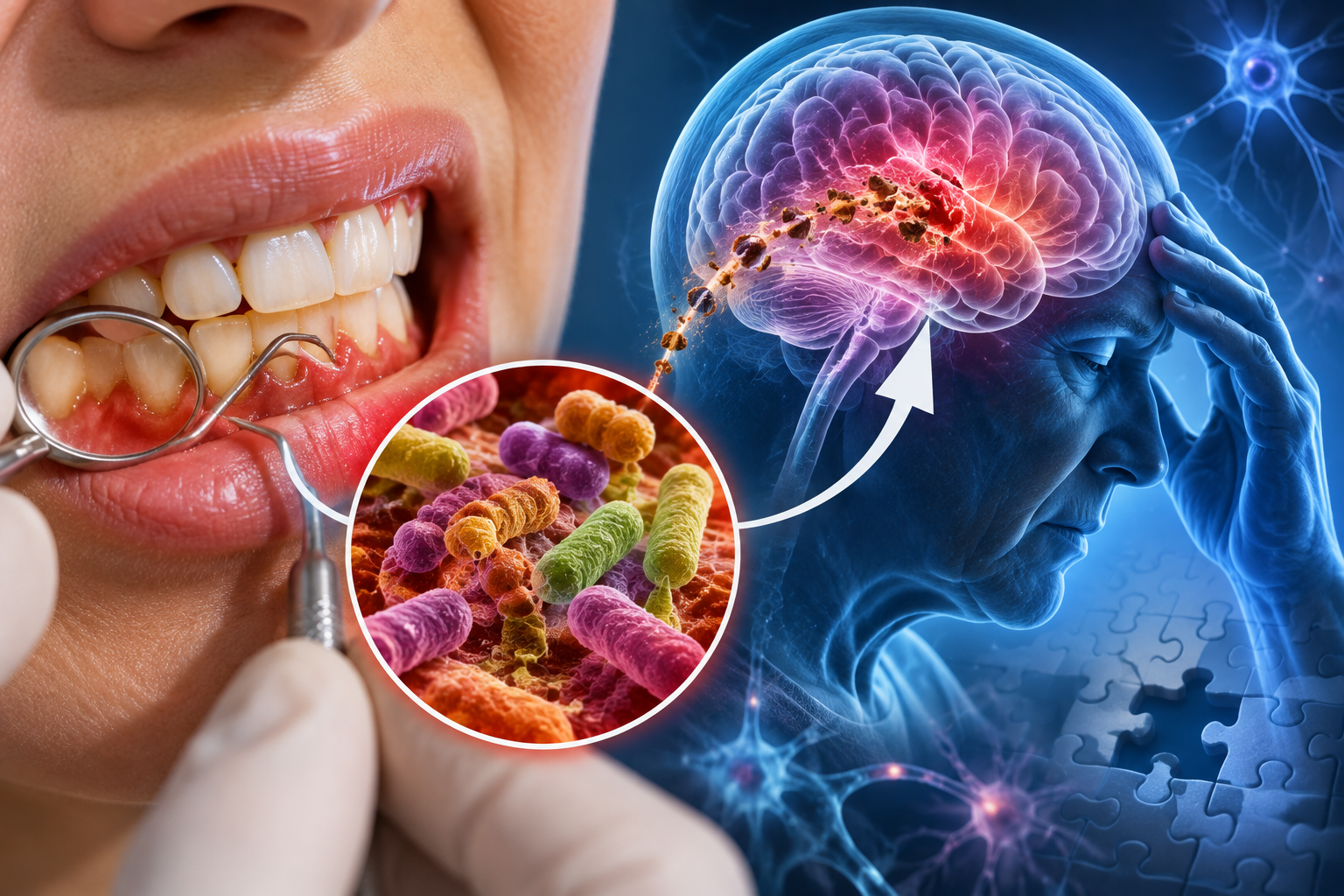
Poor oral health may have effects that go beyond the teeth and gums. Research published in the journal Science Advances has drawn attention to a possible connection between severe gum disease and Alzheimer’s disease after scientists detected evidence linked to a common periodontal bacterium in the brains of people with Alzheimer’s.
The findings have led to renewed discussion about whether chronic gum infection could influence brain health. However, researchers have also stressed that the study does not prove that gum disease directly causes Alzheimer’s.
Alzheimer’s is a complex neurological condition influenced by multiple biological and health-related factors, so the new findings are best understood as evidence of a possible link that still requires further research.
Which Gum-Disease Bacterium Is Being Studied?
The research focuses on a bacterium called Porphyromonas gingivalis.
This bacterium is strongly associated with periodontitis, a serious form of gum disease in which the tissues supporting the teeth become inflamed and damaged over time.
Researchers examining brain tissue from people who had Alzheimer’s reportedly identified toxic enzymes produced by this bacterium, known as gingipains.
According to the study discussed in the source material, these bacterial enzymes were detected in a large proportion of brain samples taken from people with Alzheimer’s.
Scientists also reported finding genetic material linked to the bacterium in brain-related samples from some living patients.
These observations strengthened interest in whether long-term oral infections could play a role in inflammatory processes affecting the brain.
How Could Bacteria From the Mouth Reach the Brain?
Scientists believe one possible route may involve the bloodstream.
When a person has severe gum inflammation or periodontal disease, tiny blood vessels in the gums can become more vulnerable.
Activities such as chewing food or brushing teeth may occasionally allow oral bacteria to enter the bloodstream.
Once circulating in the blood, bacteria or their inflammatory products may potentially reach other parts of the body.
Researchers have been investigating whether such processes could contribute to inflammation in the brain.
The proposed theory is that bacterial toxins may damage nerve cells or trigger an immune response that could affect brain function over time.
However, the exact mechanism in humans remains under investigation.
What Did Researchers Observe in Animal Studies?
Animal experiments have also been used to explore this possible connection.
In one line of research, scientists introduced Porphyromonas gingivalis infection into the mouths of mice.
Over time, evidence of the bacterium was detected in the animals’ brains.
Researchers also observed an increase in amyloid beta, a protein associated with the plaques commonly seen in the brains of people with Alzheimer’s disease.
This finding was considered important because amyloid beta accumulation is one of the major biological features studied in Alzheimer’s research.
Scientists also tested compounds designed to block the bacterial enzymes produced by P. gingivalis.
In animal experiments, these treatments reportedly reduced some signs of inflammation and helped protect brain cells.
While these findings were encouraging, results in mice cannot automatically be assumed to have the same effect in humans.
Does Gum Disease Cause Alzheimer’s?
This is the most important question—and the answer remains uncertain.
The research found an association between a bacterium involved in gum disease and biological changes linked to Alzheimer’s, but it did not establish that periodontitis is the direct or sole cause of the disease.
Alzheimer’s develops through a complicated combination of factors.
Age remains one of the strongest known risk factors, while genetics, cardiovascular health, blood pressure, metabolic health and changes in brain proteins can also play important roles.
It is therefore misleading to say that poor brushing habits or gum disease alone will cause Alzheimer’s.
The evidence instead suggests that chronic infection and inflammation may be one of several areas worth studying in relation to brain health.
Human Trials Have Not Yet Provided a Cure
Another reason for caution is that treatments targeting this bacterial pathway have not produced a clear cure for Alzheimer’s in humans.
While early laboratory and animal findings generated interest, human clinical trials involving drugs designed to interfere with bacterial enzymes have not established that eliminating the bacteria can reverse Alzheimer’s disease.
This highlights an important difference between finding a biological connection and proving that the connection can be used successfully to treat a complex disease.
Researchers therefore continue to investigate the role that oral bacteria, inflammation and immune responses may play in neurological conditions.
Why Is This Research Still Important?
Even without proving direct causation, the findings are important because they add to a growing area of research examining the relationship between oral health and overall health.
The mouth contains a large community of bacteria, and chronic gum disease can create long-term inflammation.
Scientists are increasingly studying whether persistent inflammatory conditions elsewhere in the body may influence the brain over many years.
This research may eventually help identify new ways to understand or reduce certain risk factors associated with cognitive decline.
Good Oral Hygiene Still Matters
Even though gum disease has not been proven to cause Alzheimer’s, maintaining healthy gums remains important for many established reasons.
Regular brushing, flossing or interdental cleaning, dental check-ups and timely treatment of bleeding or swollen gums can help reduce the risk of periodontal disease.
People who notice persistent gum bleeding, bad breath, loose teeth, gum recession or pain should consider consulting a dentist rather than ignoring the symptoms.
Protecting oral health is already important for preserving teeth and controlling gum infection, regardless of whether future research confirms a stronger connection with dementia.
What Should Readers Take Away From the Study?
The latest findings should not be interpreted to mean that everyone with gum disease will develop Alzheimer’s or that keeping teeth clean can completely prevent dementia.
Instead, the research suggests that Porphyromonas gingivalis and the inflammation associated with severe gum disease may be worth investigating as possible contributors to brain changes.
More large-scale human studies are needed to understand whether the relationship is causal, how strong it may be and whether treating periodontal disease can meaningfully affect long-term dementia risk.
For now, the broader message is clear: oral health should not be viewed in isolation from the rest of the body.
Taking care of your gums may already benefit your overall health, while researchers continue working to understand whether it could also play a role in protecting brain health over the long term.
Disclaimer: This article is intended for general health information only and should not be considered a substitute for medical or dental advice. People with concerns about gum disease, memory problems or other neurological symptoms should consult an appropriate healthcare professional.